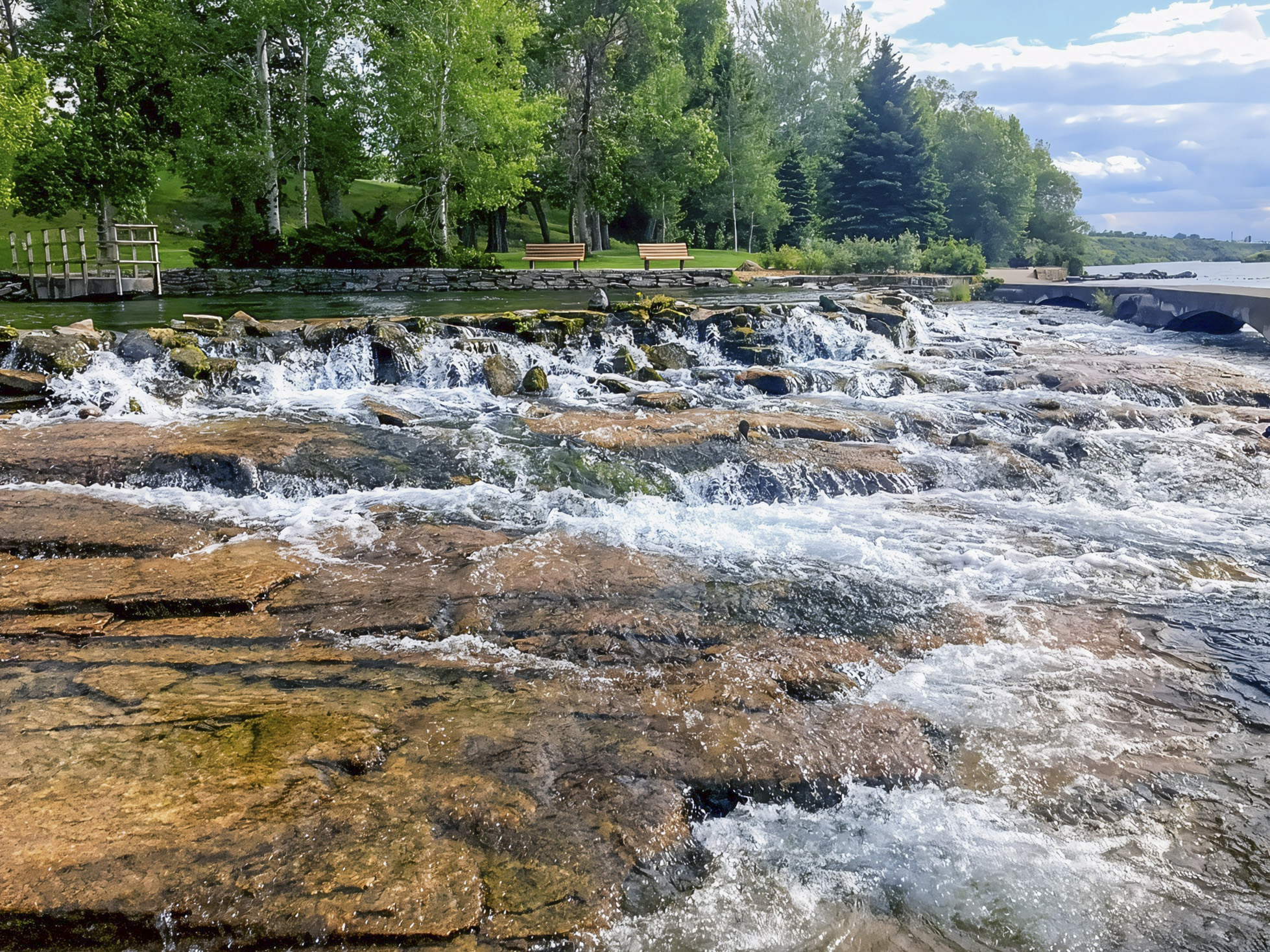

Located along the Missouri River in Great Falls, Montana, Giant Springs State Park is a beautiful destination where natural history, geology, and freshwater ecosystems come together. The park is home to one of the largest freshwater springs in the United States, producing more than 156 million gallons of water each day. The spring maintains a temperature of approximately 54°F (12°C) throughout the year, making it a fascinating example of nature’s underground water systems. The area is also historically significant because the Lewis and Clark Expedition documented Giant Springs during its journey through the region. Today, visitors can enjoy the peaceful surroundings while learning about Montana’s natural environment and history (National Park Service [NPS], n.d.).
One of the most interesting scientific features of Giant Springs is the origin of its water. Unlike an ordinary river that receives much of its water from surface runoff, Giant Springs is supplied by groundwater stored within the Madison Limestone aquifer. Rainwater and melting snow enter the ground in mountainous areas, including the Little Belt Mountains, and slowly move through underground rock formations. Limestone contains fractures and openings that allow groundwater to travel through the aquifer before eventually emerging at the surface. This underground system helps explain the spring’s enormous water flow and relatively stable temperature. The Madison aquifer is an important groundwater resource in Montana, supplying freshwater to springs, wells, and communities (Montana Climate Assessment, 2017).

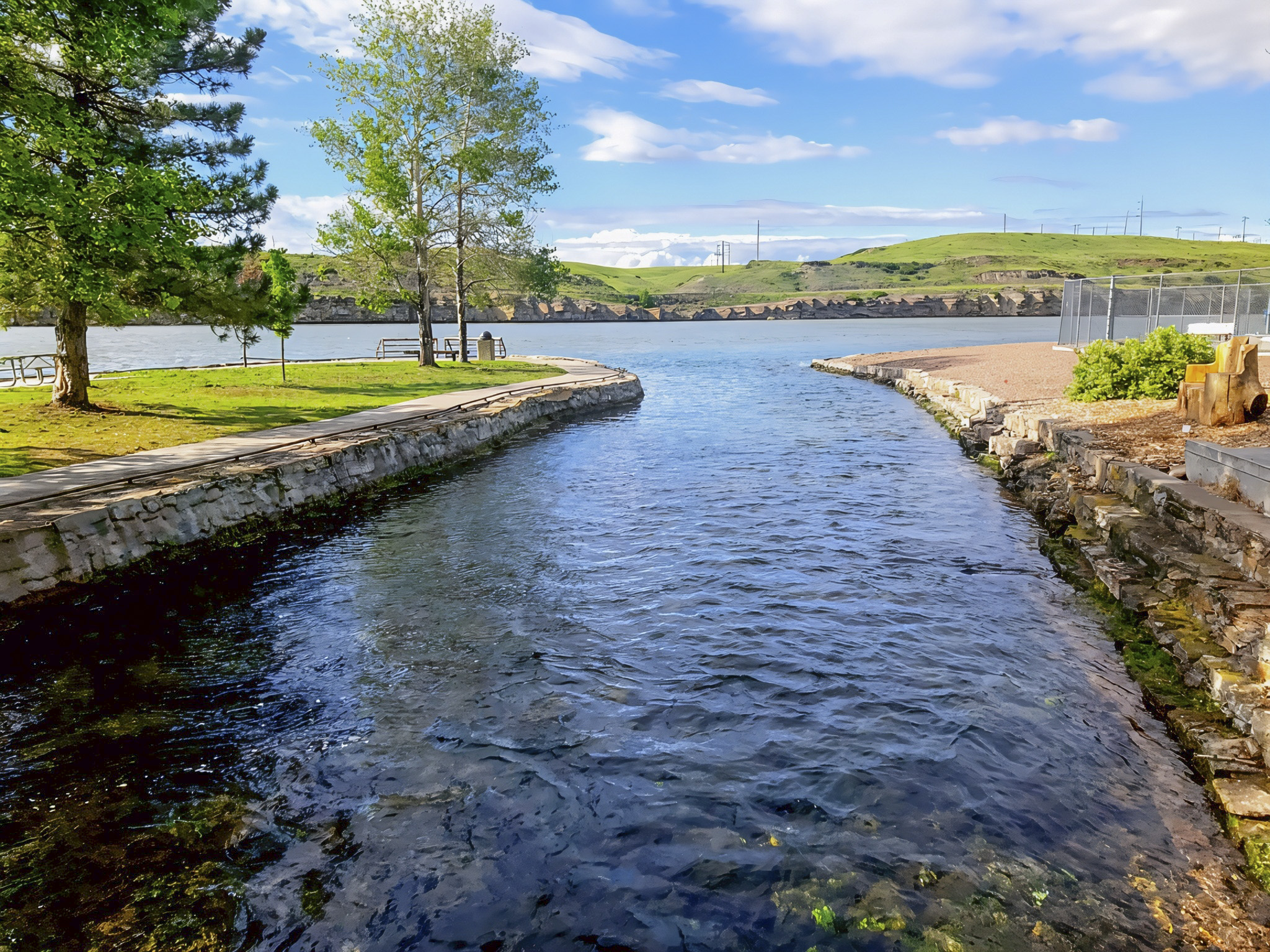
For travelers, Giant Springs State Park offers many opportunities to enjoy nature and outdoor recreation. Visitors can walk along the River’s Edge Trail, explore the park’s walking paths, observe birds, enjoy picnics, and admire the Missouri River. Another interesting attraction is the nearby Giant Springs Trout Hatchery, where visitors can learn about fish production and freshwater management. The park is also home to the Roe River, a remarkably short river measuring approximately 201 feet (61 meters), which carries spring water into the Missouri River. Giant Springs State Park connects with a larger trail network around Great Falls, making it an appealing destination for walking, cycling, photography, and wildlife observation (Montana Fish, Wildlife & Parks [FWP], n.d.-a, n.d.-b).
Beyond its recreational attractions, Giant Springs provides an opportunity to understand the importance of freshwater ecosystems. The spring’s clear, flowing water creates conditions where aquatic vegetation and other freshwater organisms can live. Water movement, dissolved gases, temperature, and available nutrients all influence these environments. The Giant Springs Trout Hatchery demonstrates how important water chemistry is for fish survival. Because its spring water naturally contains relatively little dissolved oxygen and elevated nitrogen, the hatchery treats the water to improve conditions for raising fish. This illustrates how groundwater characteristics can affect aquatic life and why freshwater management matters. With its combination of natural springs, river habitats, geological processes, and outdoor recreation, Giant Springs State Park offers travelers and science enthusiasts a meaningful opportunity to appreciate Montana’s freshwater resources (FWP, n.d.-b).


References
Montana Climate Assessment. (2017). Water. Montana Climate Assessment. https://montanaclimate.org/chapter/water
Montana Fish, Wildlife & Parks. (n.d.-a). Giant Springs State Park. https://fwp.mt.gov/stateparks/giant-springs
Montana Fish, Wildlife & Parks. (n.d.-b). Giant Springs Trout Hatchery. https://myfwp.mt.gov/fwpPub/landsMgmt/siteDetail.action?lmsId=39753638
National Park Service. (n.d.). Giant Springs State Park. U.S. Department of the Interior. https://www.nps.gov/places/giant-springs-state-park.htm
AI Disclosure Statement:
Artificial intelligence tools were used in the creation of this page, including elements such as writing, image enhancement/generation, voice enhancement, and/or editing support. All final creative decisions were made by the creator.

Leave a Reply