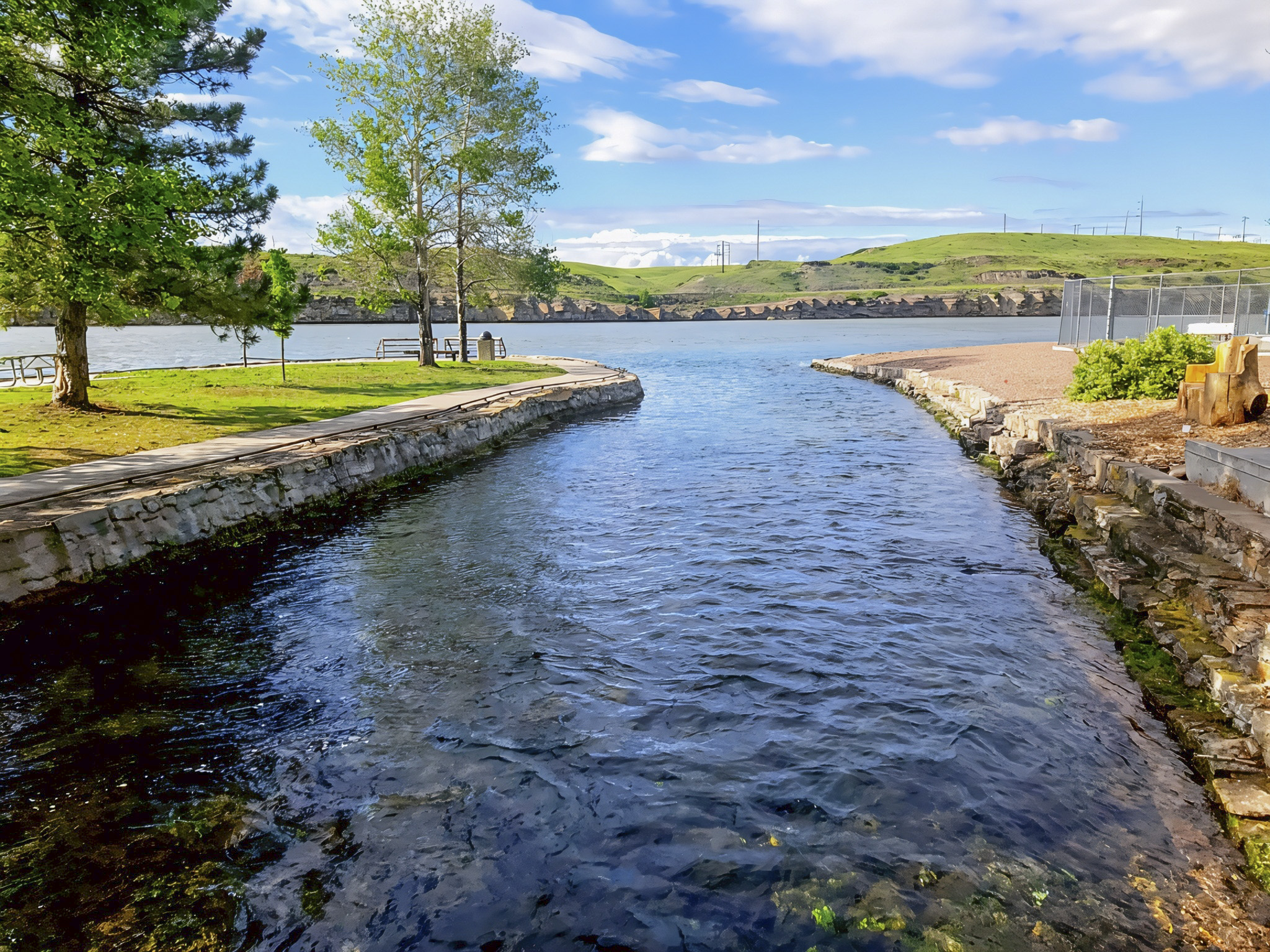

Hidden within Giant Springs State Park in Great Falls, Montana, the Roe River is one of the shortest rivers in the world, measuring approximately 201 feet (61 meters) from its source at Giant Springs to its confluence with the Missouri River. Despite its remarkably short length, the Roe River is an interesting natural attraction with an unusual connection to Montana’s underground water system. The river begins at Giant Springs, one of the largest freshwater springs in the United States, which releases more than 156 million gallons of water daily. The water flows through a short channel before joining the much larger Missouri River. The Roe River was once recognized by Guinness World Records as the world’s shortest river, although that record category has since been discontinued (Montana Fish, Wildlife & Parks [MFWP], n.d.; Montana Office of Tourism, n.d.; Montana Kids, 2026).
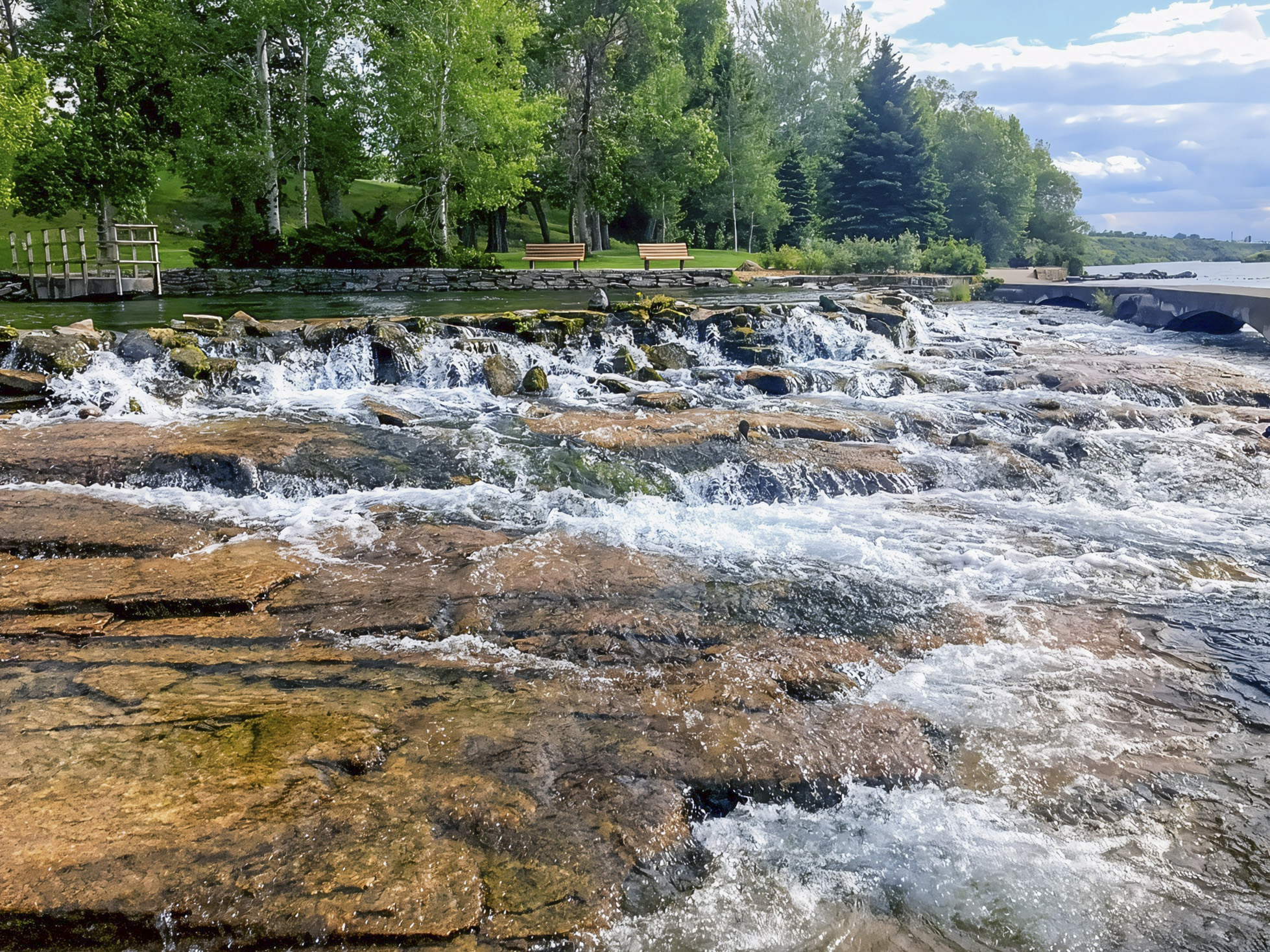
Visiting the Roe River offers travelers an opportunity to explore a fascinating freshwater ecosystem while enjoying the peaceful surroundings of Giant Springs State Park. Located along Giant Springs Road, the park provides walking paths, pedestrian bridges, picnic areas, and viewing locations where visitors can observe the river and its connection to the Missouri River. The Roe River is especially interesting because visitors can explore nearly its entire length on foot. Beyond the river, travelers can visit the nearby Giant Springs Trout Hatchery, enjoy birdwatching, explore the River’s Edge Trail, or learn about the region’s natural history. The park is a day-use destination with recreational facilities and opportunities for nature photography, making it an enjoyable stop for road-trip travelers exploring central Montana (MFWP, n.d.; National Park Service [NPS], n.d.-a).

The Roe River also has an interesting history connected to the exploration of the American West. During the Lewis and Clark Expedition, the explorers documented Giant Springs while traveling through the Great Falls region. Although their historical observations primarily concerned the springs rather than the modern name of the Roe River, they recognized the remarkable volume and clarity of water emerging from the ground. The river later became internationally famous through efforts by local Montana schoolchildren to have it recognized as the world’s shortest river. Its claim to the title has been debated, particularly in comparison with Oregon’s D River, whose measured length has also varied. Today, the Roe River remains a distinctive geographical landmark, demonstrating that a river does not need to be long to have historical and educational significance (NPS, n.d.-b; Montana Kids, 2026).
From a scientific perspective, the Roe River provides a fascinating example of groundwater hydrology, the study of how water moves beneath Earth’s surface. Its source, Giant Springs, receives groundwater associated with the Madison aquifer, a large underground water-bearing geological system connected to the Little Belt Mountains. As water travels through underground rock formations, it eventually emerges at Giant Springs and supplies the Roe River. The spring water maintains a relatively constant temperature of approximately 54°F (12°C), illustrating how groundwater systems can moderate seasonal temperature changes. This steady freshwater supply also supports aquatic environments and provides water for the nearby trout hatchery. The Roe River ultimately joins the Missouri River, demonstrating how underground water systems contribute to larger surface-water networks. For science enthusiasts, this unusually short river offers an accessible example of the connections among geology, groundwater, freshwater ecosystems, and the water cycle (Montana State Parks Foundation, n.d.; NPS, n.d.-a; Montana Office of Tourism, n.d.).

References
Montana Fish, Wildlife & Parks. (n.d.). Giant Springs State Park. https://fwp.mt.gov/stateparks/giant-springs
Montana Kids. (2026). World’s shortest river. https://montanakids.com/facts_and_figures/geography/worlds_shortest_river.htm
Montana Office of Tourism. (n.d.). Giant Springs Trout Hatchery. https://visitmt.com/listing/giant-springs-trout-hatchery-20970
Montana State Parks Foundation. (n.d.). Giant Springs State Park. https://montanastateparksfoundation.org/parks/giant-springs-state-park
National Park Service. (n.d.-a). Giant Springs State Park. U.S. Department of the Interior. https://www.nps.gov/places/giant-springs-state-park.htm
National Park Service. (n.d.-b). Giant Springs. U.S. Department of the Interior. https://www.nps.gov/places/giant-springs.htm
AI Disclosure Statement:
Artificial intelligence tools were used in the creation of this page, including elements such as writing, image enhancement/generation, voice enhancement, and/or editing support. All final creative decisions were made by the creator.

Leave a Reply