

Hidden Valley Nature Trail is one of the most scenic and accessible hiking destinations in Joshua Tree National Park, California. Located in the park’s Mojave Desert region, this approximately one-mile loop takes visitors through a secluded valley surrounded by towering granite formations, scattered Joshua trees, and diverse desert vegetation. The valley is known for its distinctive rock formations and its intriguing history as a rumored hiding place for cattle rustlers. The trail features sandy pathways, narrow passages between massive boulders, and interpretive signs explaining the area’s natural history. One interesting landmark is Cow Rock, a formation resembling a cow overlooking the valley. Hidden Valley offers an excellent introduction to the park’s geology, ecology, and history, making it popular among hikers, families, photographers, and nature enthusiasts (National Park Service [NPS], n.d.-a).
The Hidden Valley Nature Trail begins near the Hidden Valley Picnic Area, accessible from Park Boulevard. The relatively easy loop gains approximately 100 feet in elevation, although visitors encounter rock steps, uneven ground, and sandy sections. Along the way, hikers can explore sheltered passages between granite boulders, observe unusual rock shapes, and discover a surprising variety of Mojave Desert plants. Towering rock walls provide opportunities to appreciate the landscape’s scale, while the surrounding open areas reveal Joshua trees, Mojave yuccas, cholla cacti, dry shrubs, and native grasses. The nearby picnic area provides a convenient place to relax among Joshua trees and granite outcrops. Although the trail is relatively short, hikers should carry drinking water, wear appropriate footwear, and prepare for limited shade, extreme seasonal temperatures, and unreliable cellular reception. Staying on established trails also helps protect fragile desert vegetation and soils (NPS, n.d.-a, n.d.-b).

Geologically, Hidden Valley is a remarkable example of how underground volcanic activity, weathering, and erosion can transform a landscape over millions of years. Much of the area’s exposed bedrock consists of monzogranite, an intrusive igneous rock that formed when molten magma slowly cooled deep beneath Earth’s surface. As the overlying rocks eroded, the granite became exposed, revealing networks of fractures known as joints. Groundwater entering these fractures gradually altered minerals and weakened the surrounding rock, producing rounded boulders through a process called spheroidal weathering. Continued erosion removed softer materials and exposed the enormous stacked rock formations that characterize the valley today. The U.S. Geological Survey identifies the Hidden Valley area as an example of a landscape containing inselbergs, isolated rocky outcrops rising above the surrounding terrain. These formations preserve evidence of earlier environmental conditions when the region experienced greater moisture than the modern Mojave Desert (NPS, n.d.-c; U.S. Geological Survey [USGS], n.d.).
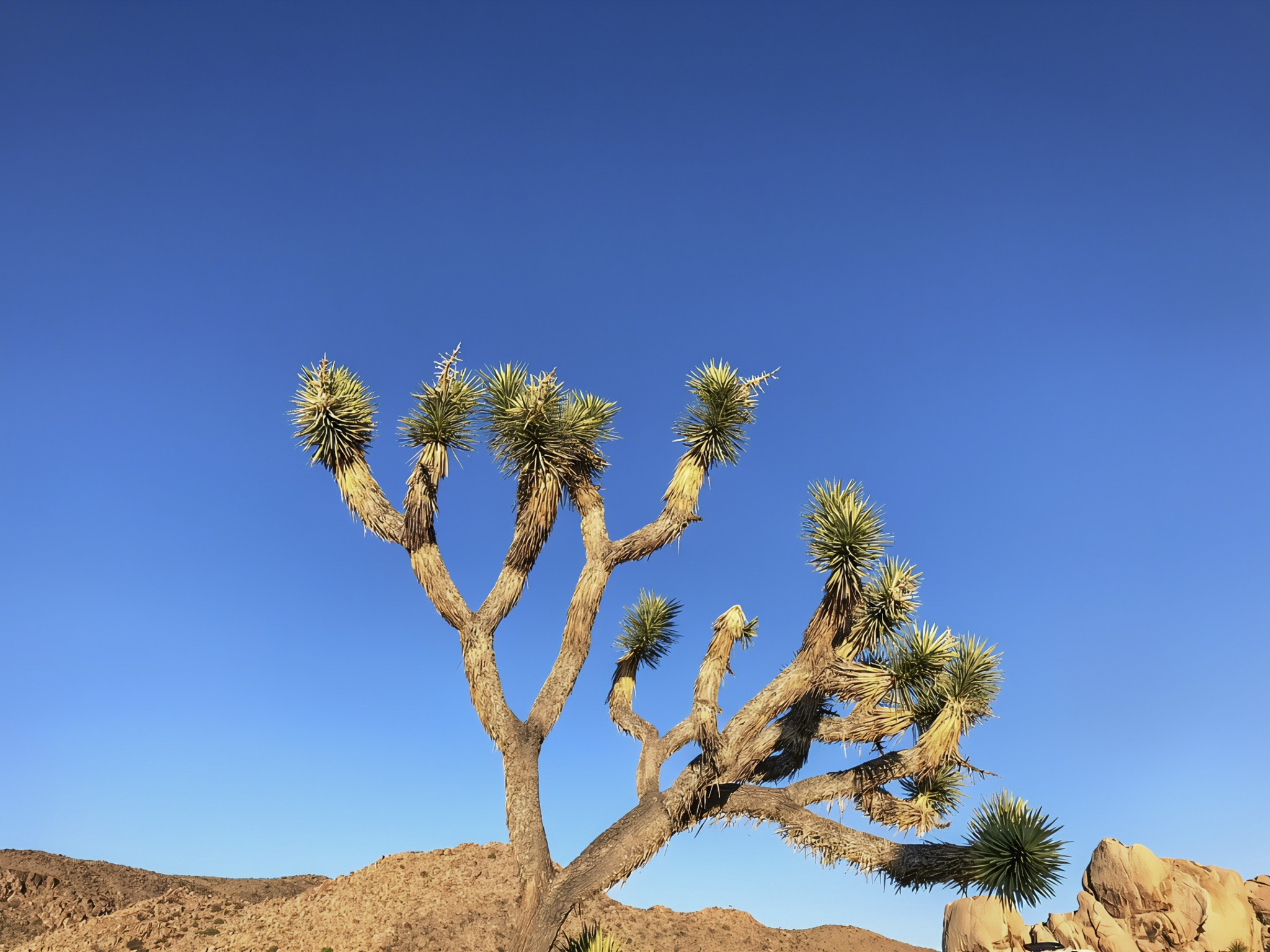
Biologically, Hidden Valley supports an interesting community of plants adapted to limited rainfall, intense sunlight, and rocky soils. Joshua trees (Yucca brevifolia) are among the area’s most recognizable plants, while Mojave yuccas (Yucca schidigera) produce dense clusters of sharp, sword-shaped leaves. Cholla cacti, including the silver cholla (Cylindropuntia echinocarpa), have succulent stems that store water and protective spines that discourage herbivores. Chollas also use crassulacean acid metabolism (CAM), a specialized form of photosynthesis that allows them to absorb much of their carbon dioxide at night, reducing water loss during hot days. Woody shrubs, junipers in suitable habitats, and seasonal grasses contribute to the desert plant community, while sheltered spaces between granite boulders provide microhabitats with reduced sun exposure and localized moisture retention. These vegetation communities support insects, reptiles, birds, and small mammals. The park has more than 750 documented plant species, demonstrating that desert ecosystems can support substantial biodiversity despite their harsh conditions. However, invasive grasses, habitat fragmentation, and other environmental pressures threaten native vegetation, making conservation especially important (NPS, n.d.-d, n.d.-e; NPS, 2023).


References
National Park Service. (n.d.-a). Hidden Valley Trailhead. U.S. Department of the Interior. https://www.nps.gov/places/hidden-valley-trailhead.htm
National Park Service. (n.d.-b). Ecology (Hidden Valley). U.S. Department of the Interior. https://www.nps.gov/places/ecology-hidden-valley.htm
National Park Service. (n.d.-c). Geologic formations. Joshua Tree National Park. https://www.nps.gov/jotr/learn/nature/geologicformations.htm
National Park Service. (n.d.-d). Plants. Joshua Tree National Park. https://www.nps.gov/jotr/learn/nature/plants.htm
National Park Service. (n.d.-e). Plant species list. Joshua Tree National Park. https://www.nps.gov/jotr/learn/nature/plant_species_list.htm
National Park Service. (2023). Plants. Mojave National Preserve. https://home.nps.gov/moja/learn/nature/plants.htm
U.S. Geological Survey. (n.d.). Geology of Joshua Tree National Park. https://www.usgs.gov/geology-and-ecology-of-national-parks/geology-joshua-tree-national-park
AI Disclosure Statement:
Artificial intelligence tools were used in the creation of this page, including elements such as writing, image enhancement/generation, voice enhancement, and/or editing support. All final creative decisions were made by the creator.


Leave a Reply