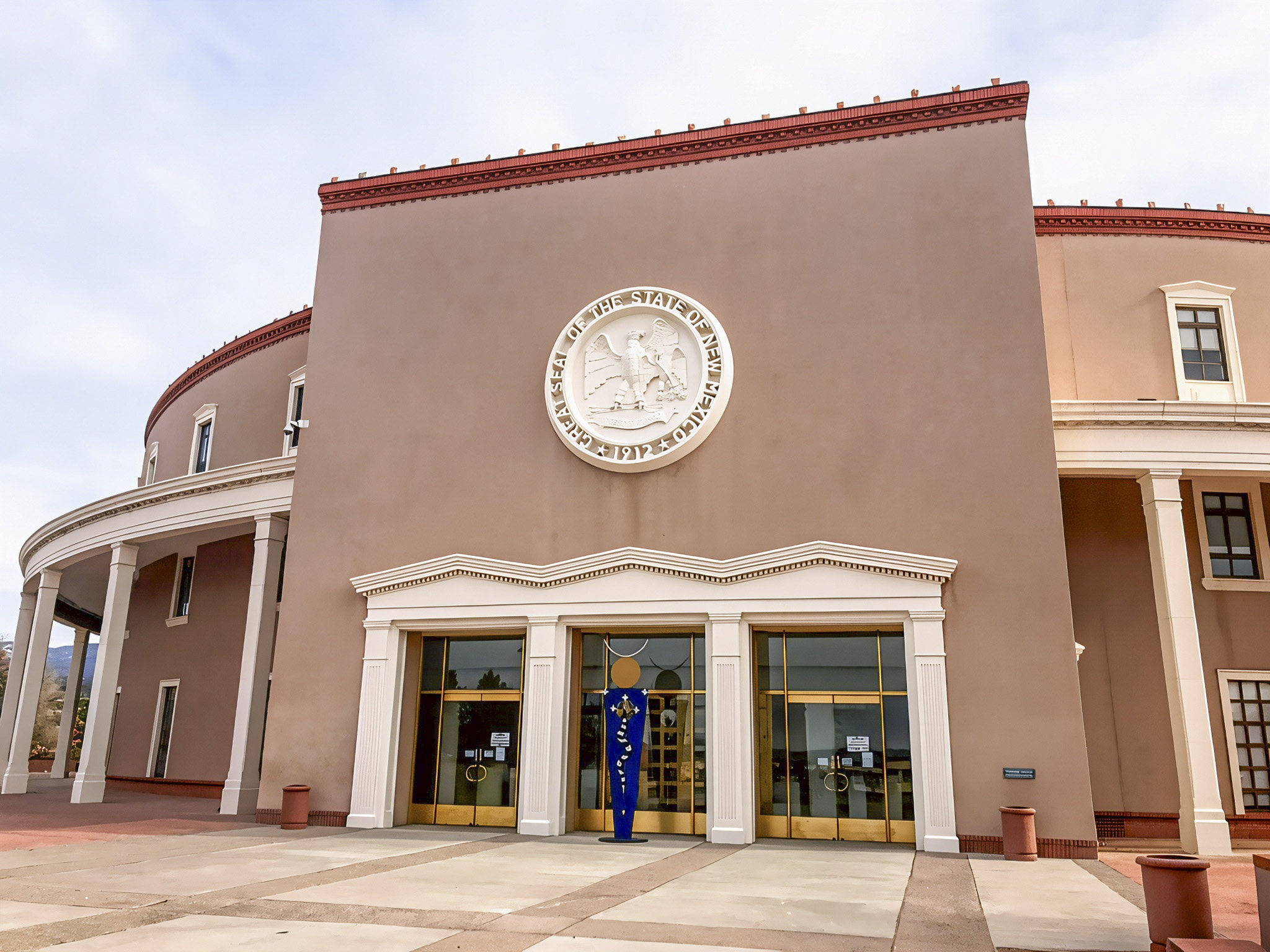

The New Mexico State Capitol in Santa Fe, affectionately known as the Roundhouse, combines a working seat of government with architecture and public art that reflect the state’s cultural identity. Its design blends Territorial architecture, Pueblo-inspired forms, and Greek Revival details, while its circular layout incorporates the Zia sun symbol associated with Zia Pueblo and New Mexico’s state flag. The Roundhouse continues a long history of government in Santa Fe, following earlier capitols that included the Palace of the Governors, a territorial capitol destroyed by fire, and the building now called the Bataan Memorial Building. These landmarks connect today’s Capitol with centuries of political and cultural change in the Southwest (New Mexico Secretary of State, n.d.).
For travelers, the Capitol stands at the intersection of Old Santa Fe Trail and Paseo de Peralta, making it a convenient stop while exploring central Santa Fe. Visitors can take a self-guided tour using an English- or Spanish-language guide or arrange a guided visit through the Capitol’s visitor office. The building generally welcomes visitors on weekdays, with additional Saturday access during summer, and free weekday parking is available nearby on Galisteo Street. Checking the Legislature’s official visitor page before arriving helps confirm current access. A visit offers an opportunity to learn about state government while exploring an extensive collection of regional art within a functioning public building (New Mexico Legislature, n.d.).

Public art is an essential part of the Roundhouse experience. Allan Houser’s Morning Prayer connects the Capitol with the work of a celebrated Chiricahua Apache sculptor, while Glenna Goodacre’s bronze Tug o’War captures the energy of five children engaged in a playful contest (Highsmith, 2020; Smithsonian Institution, n.d.). These outdoor sculptures complement the Capitol Art Collection, which includes paintings, photography, textiles, ceramics, sculpture, and other creative media. The prominent state seals above the entrance wings and the building’s regional architectural influences add another layer of meaning, encouraging visitors to consider how art and architecture communicate New Mexico’s history and cultural identity (Tourism Santa Fe, n.d.).
Science-lovers can also find connections to geology and botany throughout the Capitol. The central rotunda incorporates New Mexico travertine and a state-seal mosaic made with turquoise and brass, offering a starting point for exploring the relationship between natural materials and architectural design. Outside, the Clay Buchanan Memorial Gardens provide landscaped paths among trees, flowering plants, and public sculptures. The grounds include sequoias, roses, and numerous other plants, adding botanical interest to a walk around the building. Exploring both the interior and gardens allows travelers to appreciate the Capitol as a place where government, art, natural materials, and living landscapes come together (Tourism Santa Fe, n.d.).


References
- Highsmith, C. M. (2020). Artist Allan Houser’s “Morning Prayer” sculpture stands in front of the New Mexico Capitol in Santa Fe [Photograph]. Library of Congress.
- New Mexico Legislature. (n.d.). Visitors.
- New Mexico Secretary of State. (n.d.). State Capitol.
- Smithsonian Institution. (n.d.). Tug o’War (sculpture).
- Tourism Santa Fe. (n.d.). New Mexico State Capitol.
AI Disclosure Statement:
Artificial intelligence tools were used in the creation of this page, including elements such as writing, image enhancement/generation, voice enhancement, and/or editing support. All final creative decisions were made by the creator.
Leave a Reply