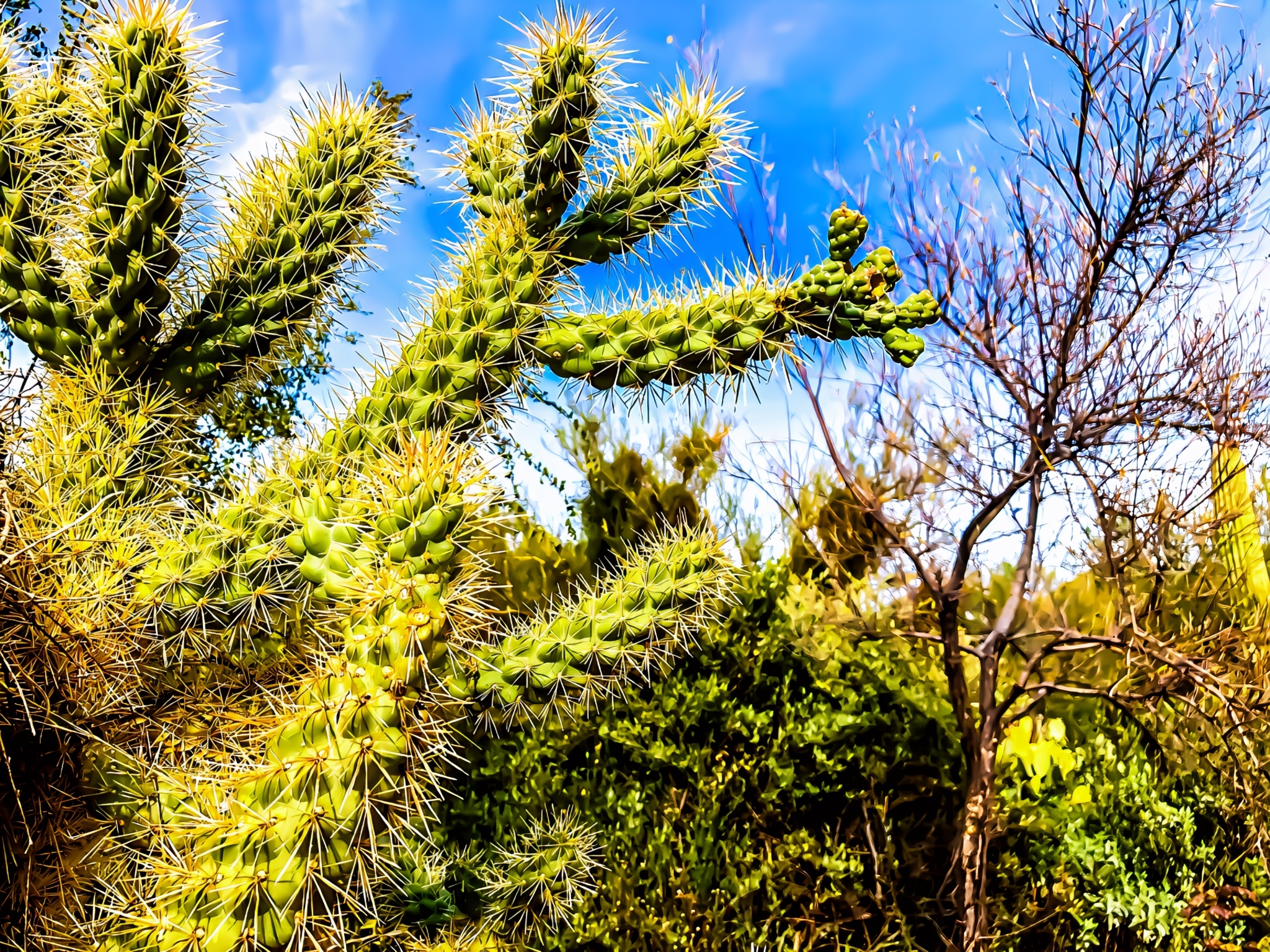

The Arizona-Sonora Desert Museum’s botanical gardens in Tucson introduce travelers to the remarkable variety of plants that thrive in the Sonoran Desert. Rather than occupying a single enclosed garden, the botanical collections extend across the grounds, representing habitats ranging from desert grasslands to tropical deciduous forest. The museum reports approximately 1,200 plant types and 56,000 individual specimens in its gardens. Towering saguaros, branching palo verde trees, and sculptural succulents reveal a landscape shaped partly by winter rainfall and summer monsoons. For science lovers, these collections provide an accessible introduction to how rainfall, elevation, and temperature influence desert vegetation (Arizona-Sonora Desert Museum, n.d.-b).
Begin your botanical exploration in the Cactus Garden, where prickly pears, chollas, barrel cacti, hedgehog cacti, and columnar species offer striking comparisons in shape and growth. Continue to the Agave Garden, then explore the desert grassland plantings and pollination gardens for a broader view of regional plant life. Downloading the museum’s map beforehand makes it easier to plan a route around these botanical areas. Because the museum is primarily an outdoor walking destination, bring comfortable shoes, sunscreen, a hat, and a refillable water bottle. Water-refilling stations are available, and visitors should remain on designated paths and leave flowers and other plant material undisturbed (Arizona-Sonora Desert Museum, n.d.-a, n.d.-b, n.d.-c).

The gardens also make desert biology easier to understand. Succulent plants store water in fleshy tissues, but not every succulent is a cactus: agaves, for example, belong to a different plant family. Many desert succulents use a water-saving form of photosynthesis called CAM, opening their gas-exchange pores mainly at night when conditions are cooler and water loss is lower. Their unusual shapes therefore reflect survival strategies as well as visual beauty (Arizona-Sonora Desert Museum, n.d.-e). Flowers reveal another essential relationship: fishhook barrel cacti depend on cactus bees for pollination, while their fruits provide food for several desert animals. Looking closely at a flowering cactus can turn a garden walk into a lesson about reproduction and the connections that sustain desert ecosystems (Arizona-Sonora Desert Museum, n.d.-a).
Current botanical research adds another dimension to the visit. The museum is tracking flowering and fruiting in watered and unwatered plants on its grounds and nearby, using decades of observations to investigate changes in seasonal timing, known as phenology. This ongoing work examines changes that could affect pollination, seedling survival, and food availability; it should not be interpreted as a completed set of findings (Arizona-Sonora Desert Museum, n.d.-d). A recent conservation report by museum scientist Erin C. Riordan also outlines research priorities for chiltepín, a wild ancestor of cultivated peppers, including population surveys, genetic research, seed banking, and propagation. Although the report concerns regional conservation rather than an experiment within the visitor gardens, it illustrates why living plant collections matter: they can help safeguard genetic diversity valuable to both ecosystems and future agriculture (Riordan, 2026).


References
- Arizona-Sonora Desert Museum. (n.d.-a). Cactus garden. https://www.desertmuseum.org/visit/exhibits_cactusgardens.php
- Arizona-Sonora Desert Museum. (n.d.-b). Desert Museum gardens. https://www.desertmuseum.org/visit/gardens.php
- Arizona-Sonora Desert Museum. (n.d.-c). Know before you go. https://desertmuseum.org/about/faq.php
- Arizona-Sonora Desert Museum. (n.d.-d). Phenology. https://desertmuseum.org/center/phenology.php
- Arizona-Sonora Desert Museum. (n.d.-e). Succulent adaptations. https://digitallibrary.desertmuseum.org/programs/succulents_adaptation.php
- Riordan, E. C. (2026). Summary report: Wild chile conservation workshop and gathering. Arizona-Sonora Desert Museum. https://desertmuseum.org/center/Riordan-2026-Wild-Chile-Report.pdf
AI Disclosure Statement:
Artificial intelligence tools were used in the creation of this page, including elements such as writing, image enhancement/generation, voice enhancement, and/or editing support. All final creative decisions were made by the creator.

Leave a Reply