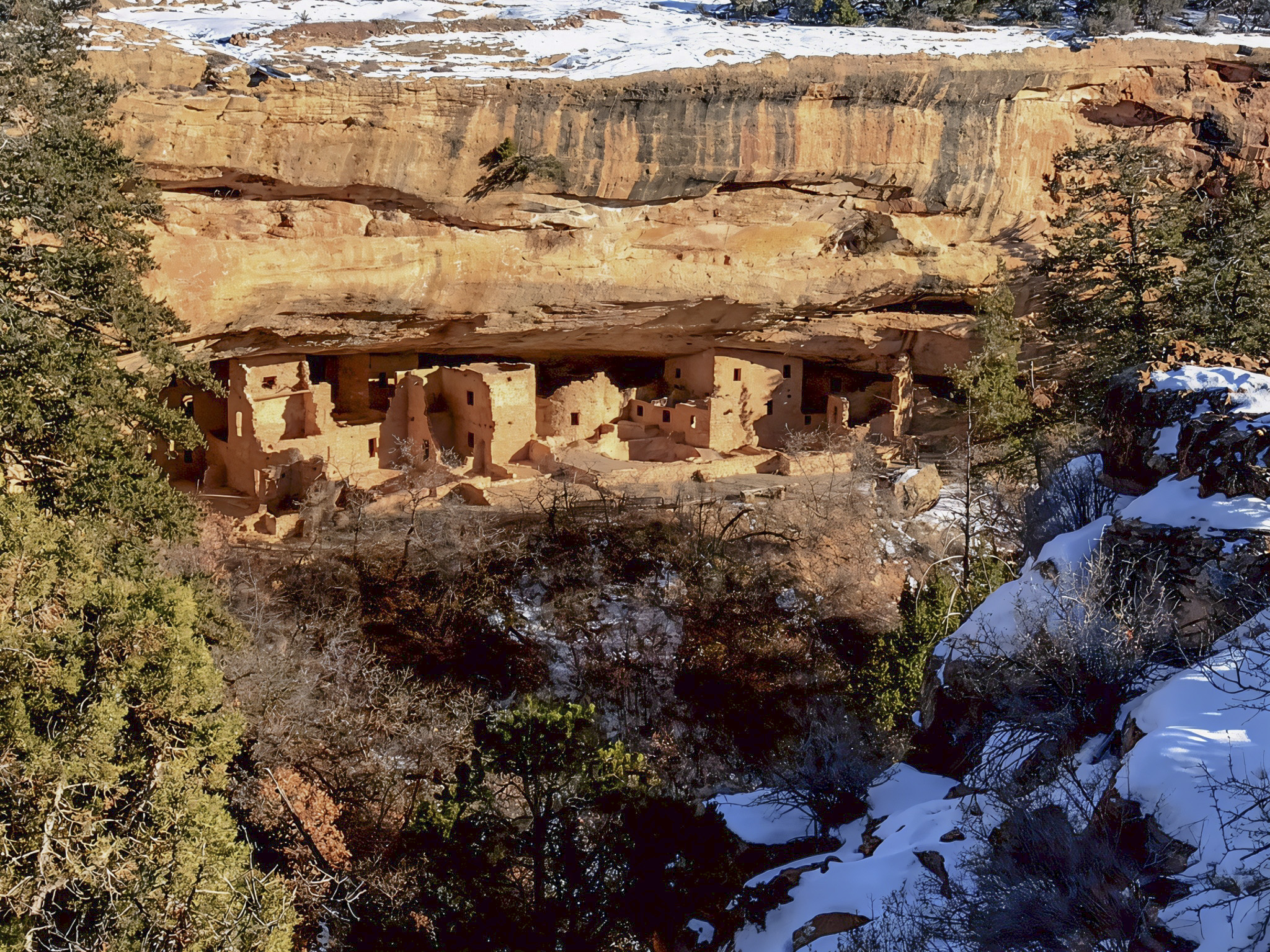

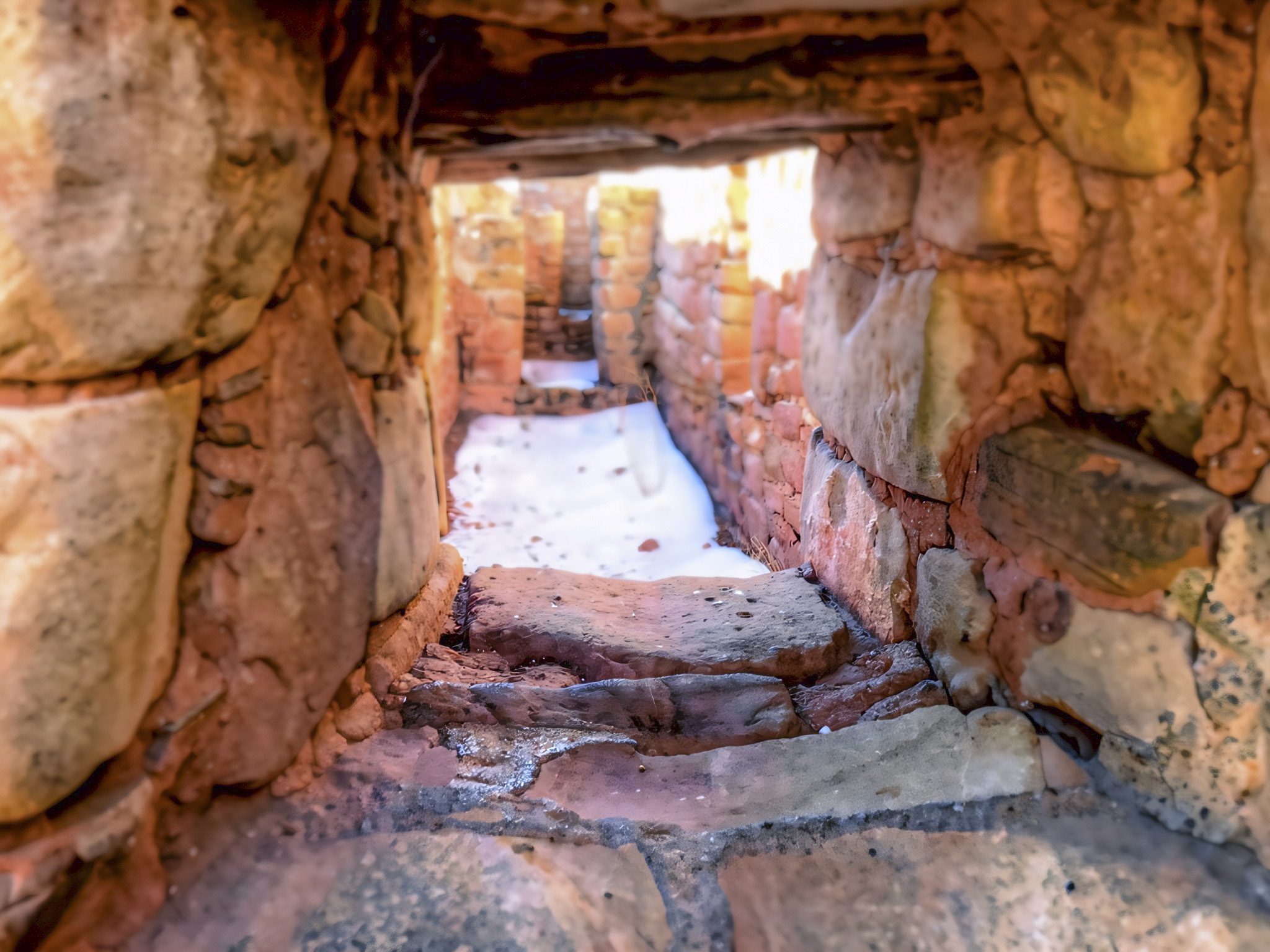
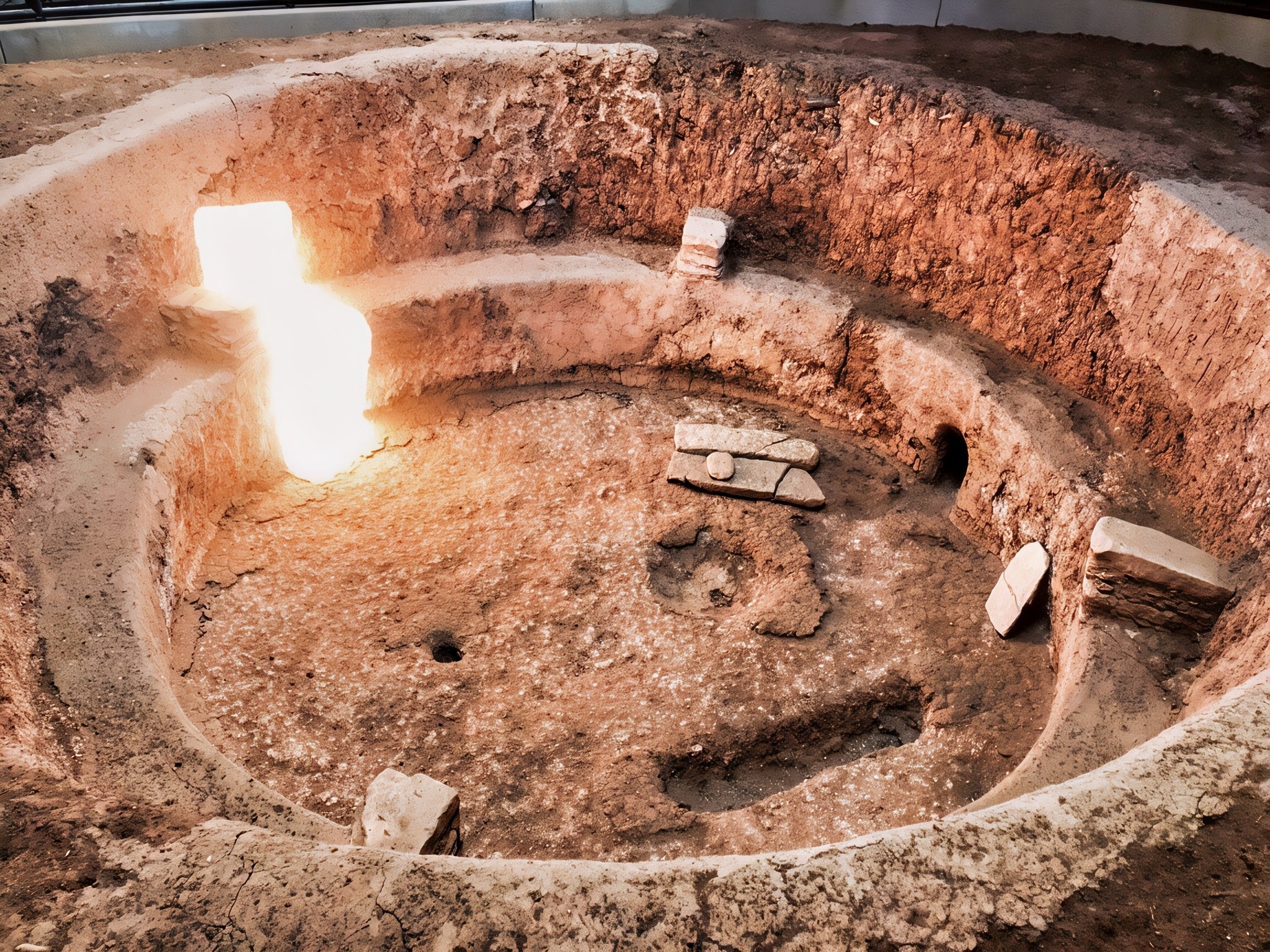
Spruce Tree House is one of the most impressive Ancestral Pueblo cliff dwellings in Mesa Verde National Park and is the third largest cliff dwelling in the park. Built mainly between about 1211 and 1278 CE, it contains roughly 130 rooms and eight kivas, or circular ceremonial spaces, within a large natural sandstone alcove. Archaeologists estimate that approximately 60 to 80 people lived there during its peak occupation. The protective overhang helped preserve the settlement unusually well, and the National Park Service reports that about 90% of the visible walls, wood, and plaster are original (National Park Service [NPS], n.d.-a).
For travelers, Spruce Tree House is located on Chapin Mesa near the Mesa Verde Museum. Visitors currently cannot enter the dwelling because it has been closed since 2015 due to the risk of rockfall from the sandstone alcove above it. However, the site can still be viewed from overlooks near the museum, including an accessible viewpoint. The overlooks provide a clear view of the multi-story masonry structures and surrounding canyon, making this one of the easier major cliff dwellings to appreciate without taking a ranger-led tour. Visitors should check current park conditions before traveling because weather, road work, and seasonal operations can affect access within Mesa Verde (NPS, 2026).

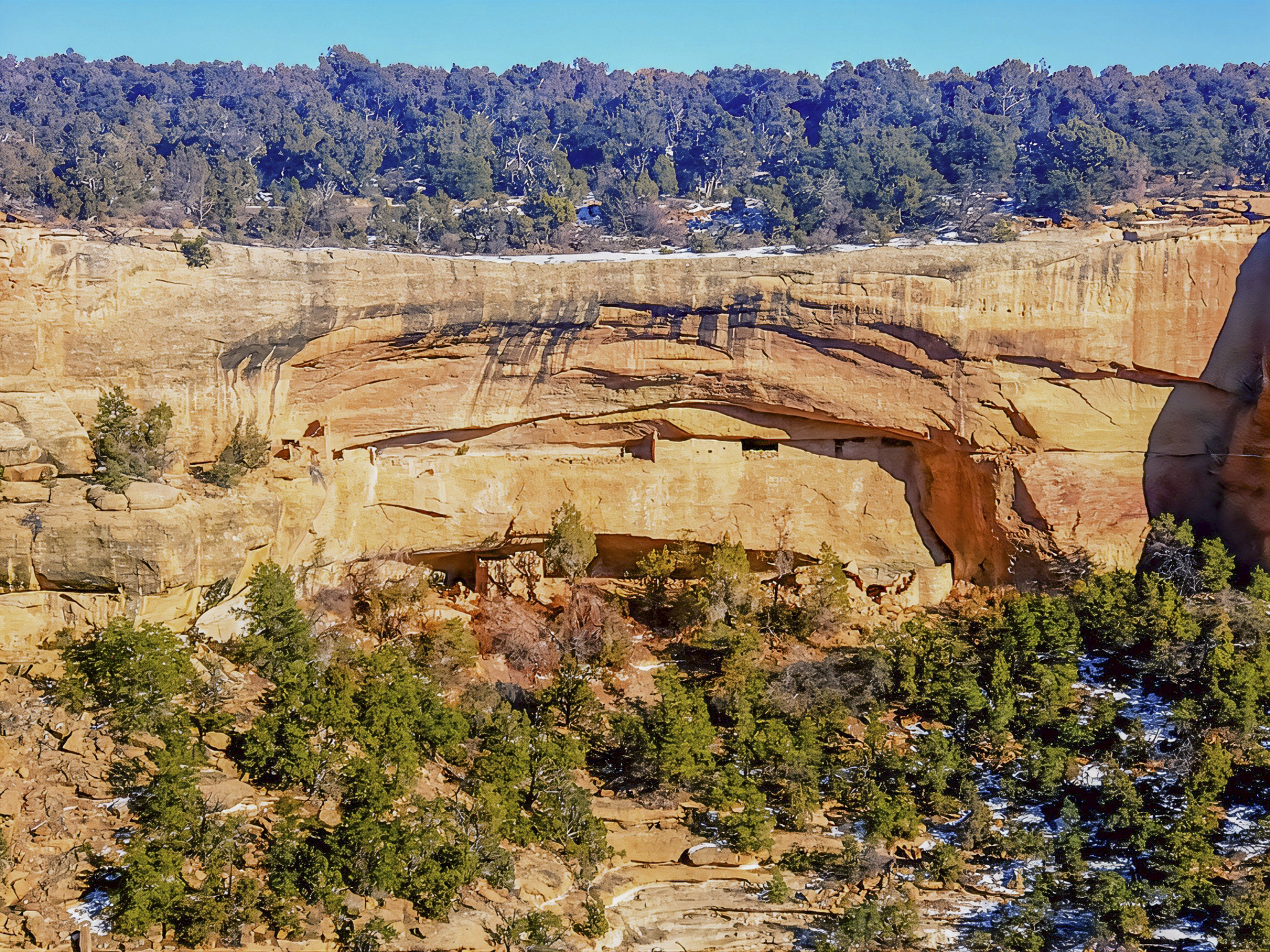
Historically, Spruce Tree House was part of a much larger Ancestral Pueblo cultural landscape that developed across Mesa Verde over many centuries. Its residents farmed crops such as corn, beans, and squash on the surrounding mesa tops while living and gathering within the sheltered alcoves. The site was excavated and stabilized in 1908 by archaeologist Jesse Walter Fewkes of the Smithsonian Institution, who removed fallen debris and helped preserve standing walls. Archaeological evidence suggests that construction occurred gradually rather than all at once, with rooms and kivas being added as the community developed. By the late 1200s, as many as 19 households may have occupied the settlement (NPS, n.d.-a; NPS, n.d.-b).
Scientifically, Spruce Tree House offers researchers an unusually well-preserved record of Ancestral Pueblo architecture, engineering, and daily life. Tree-ring dating of wooden roof beams has helped archaeologists determine when different parts of the settlement were constructed, allowing them to reconstruct how the village expanded over time. The site also illustrates an ongoing geological process: the same erosion that formed Mesa Verde’s sandstone alcoves continues today. A natural sandstone arch above Spruce Tree House has developed fractures and instability, creating the modern rockfall hazard that keeps the dwelling closed. Researchers and park specialists continually monitor the rock, masonry, plaster, wood, rainfall effects, insects, and other factors that influence preservation, making Spruce Tree House both an archaeological treasure and an active natural laboratory (NPS, n.d.-a; NPS, n.d.-c).


References:
National Park Service. (2026). Conditions and alerts: Mesa Verde National Park. U.S. Department of the Interior.
Mesa Verde current conditions
National Park Service. (n.d.-a). Spruce Tree House. Mesa Verde National Park, U.S. Department of the Interior.
Spruce Tree House — National Park Service
National Park Service. (n.d.-b). Photo gallery: Then & now. Mesa Verde National Park, U.S. Department of the Interior.
Spruce Tree House historical preservation information
National Park Service. (n.d.-c). Spruce Tree House closure. Mesa Verde National Park, U.S. Department of the Interior.
Spruce Tree House closure and rockfall information
AI Disclosure Statement:
Artificial intelligence tools were used in the creation of this page, including elements such as writing, image enhancement/generation, voice enhancement, and/or editing support. All final creative decisions were made by the creator.
Leave a Reply