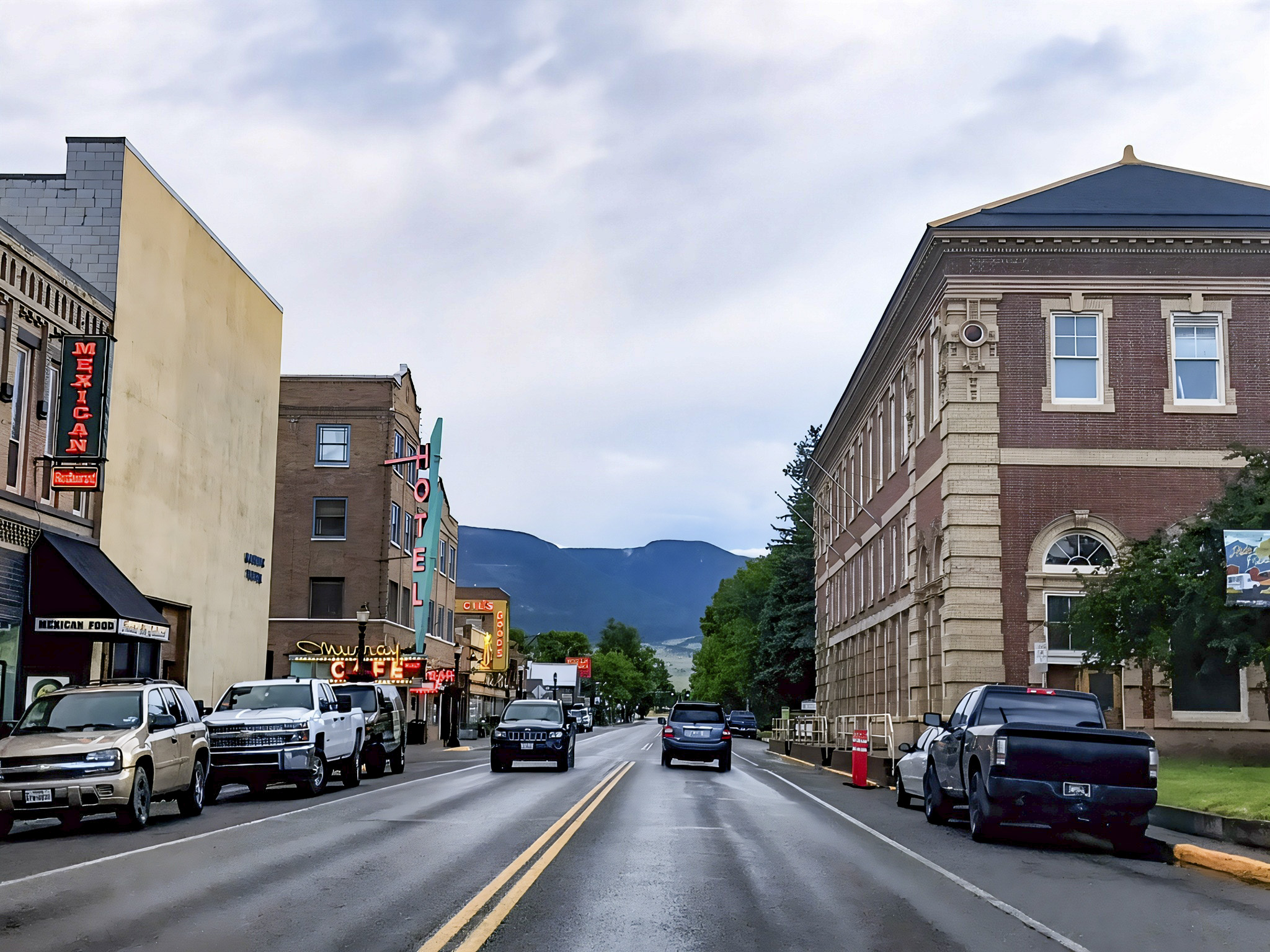

Located along the Yellowstone River in southwestern Montana, Livingston is a historic Western town known for its railroad heritage, preserved architecture, and scenic mountain surroundings. The community lies between the Absaroka, Bridger, and Gallatin mountain ranges and has long served as a transportation and commercial center in the Yellowstone River Valley. Before European American settlement, Indigenous peoples, including the Crow, Blackfeet, and Shoshone, lived, hunted, and traveled throughout the region. William Clark and members of the Lewis and Clark Expedition also passed through the area while exploring the Yellowstone River Valley. Livingston’s modern development began with the arrival of the Northern Pacific Railroad, which transformed the area into an important transportation hub. Today, travelers can explore its historic downtown, museums, restaurants, and nearby outdoor attractions while experiencing the character of a traditional Montana railroad town (City of Livingston, n.d.; Advisory Council on Historic Preservation [ACHP], n.d.).
Livingston’s railroad history began in the early 1880s, when the Northern Pacific Railroad expanded westward across Montana Territory. The original settlement was called Clark City, named after railroad contractor Herman Clark, before being renamed Livingston in recognition of Johnston Livingston, a railroad director and major stockholder. The railroad established important maintenance facilities and transportation operations in the growing community, creating employment opportunities and encouraging the development of hotels, stores, saloons, and other businesses. Livingston also became the original railroad gateway to Yellowstone National Park, America’s first national park. Tourists arriving by train could continue south toward the park, initially traveling by stagecoach from the railroad terminus near its northern entrance. As railroad access expanded, Livingston became an important stop for visitors exploring the Yellowstone region. The historic Livingston Depot, completed in 1902, was designed by the architectural firm Reed & Stem, which later participated in the design of New York City’s Grand Central Terminal. Featuring Italianate architecture, ornamental details, and an elegant colonnade, the station reflected the importance of railroad tourism. It now serves as the Livingston Depot Center, preserving a significant part of the town’s transportation history (ACHP, n.d.; Livingston Depot Foundation, n.d.; National Park Service [NPS], n.d.).

Beyond the railroad, Livingston’s historical development was closely connected to ranching, agriculture, mining, and the growth of commerce in southwestern Montana. Railroad transportation allowed local businesses and ranchers to ship cattle, wool, agricultural products, and other goods to distant markets, helping strengthen the regional economy. As Livingston expanded, its commercial district developed brick buildings, hotels, banks, restaurants, and retail establishments that reflected the architectural styles of the late nineteenth and early twentieth centuries. The town became the county seat of Park County in 1887, reinforcing its position as an administrative and commercial center. Its historic buildings and neighborhoods also reveal differences in the lives of railroad workers, merchants, and wealthy business owners who helped shape the community. Although passenger railroad service eventually declined, Livingston retained much of its architectural heritage, and several historic structures were preserved or adapted for modern uses. Visitors can learn more about this history at the Livingston Depot Center and Yellowstone Gateway Museum, while walking through downtown provides an opportunity to experience the town’s surviving Western architecture (ACHP, n.d.; Livingston Depot Foundation, n.d.; Montana Office of Tourism, n.d.).
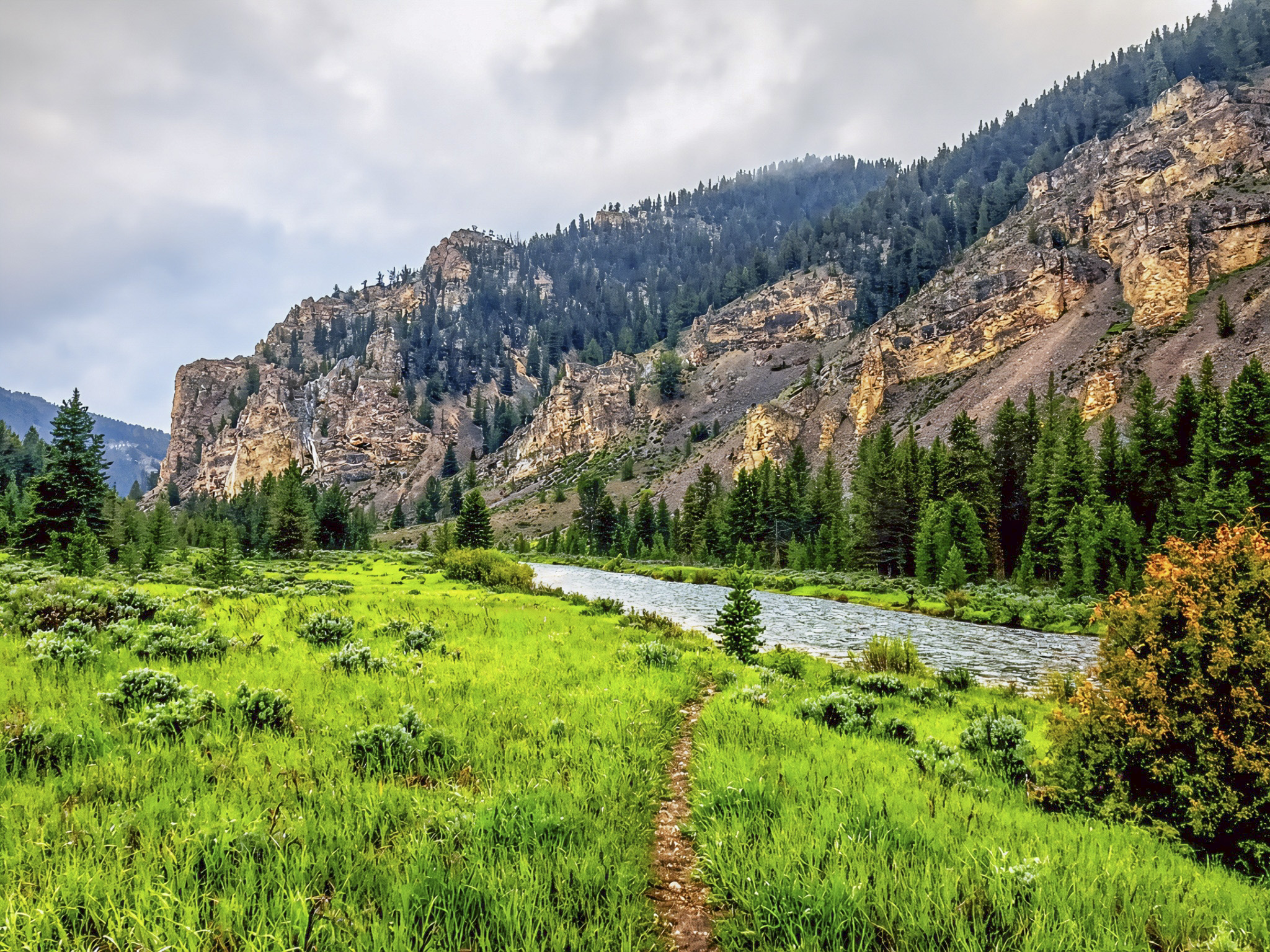
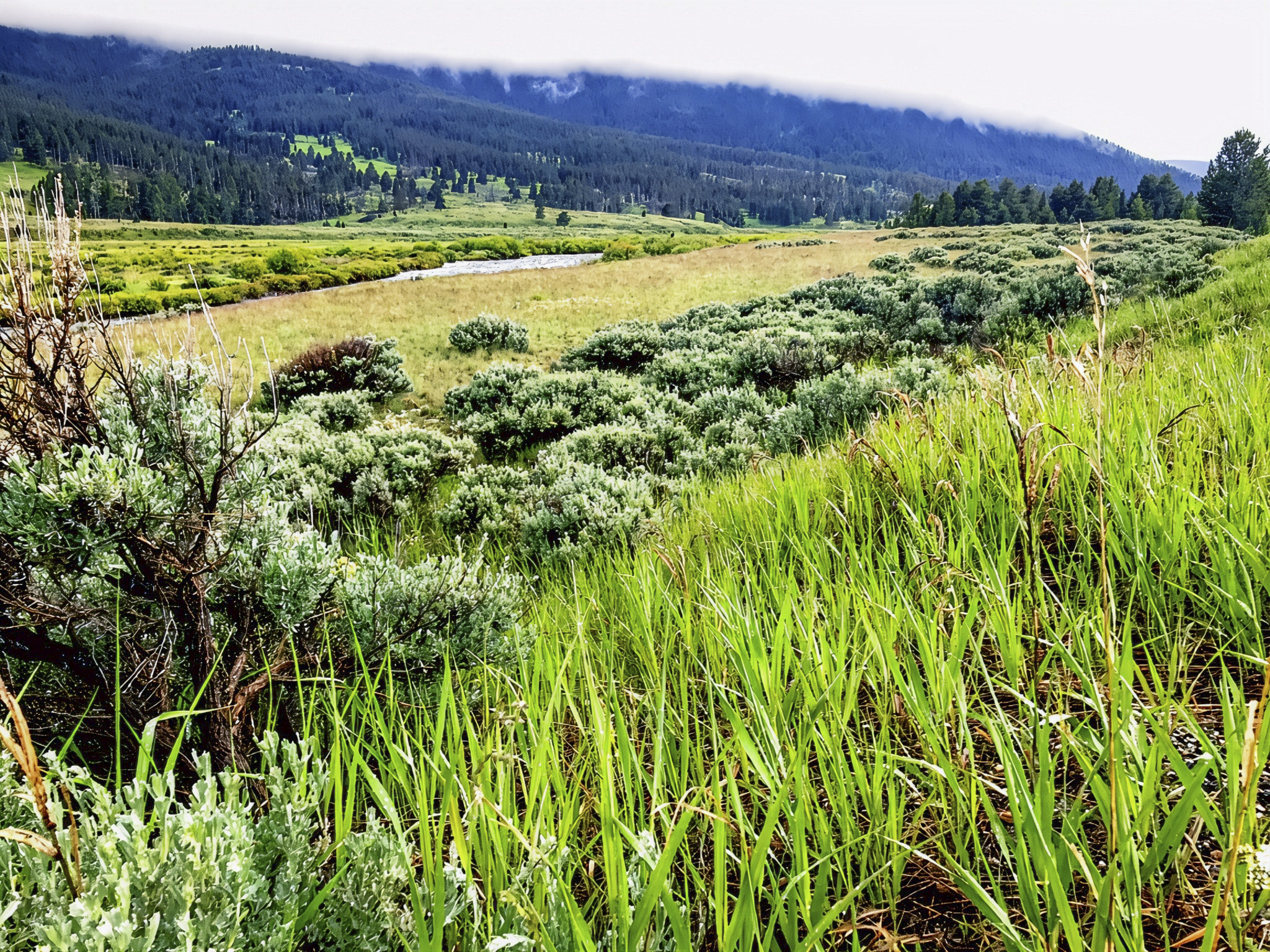
Livingston’s surrounding environment adds another dimension to its historical importance, particularly for travelers interested in geology and biology. The town lies in a geologically complex region shaped by tectonic activity, sediment deposition, and erosion over millions of years. The United States Geological Survey identifies the Livingston Formation and related rock units as belonging to the Late Cretaceous Period, providing scientific evidence of ancient geological environments that existed long before the modern Yellowstone River Valley formed (United States Geological Survey [USGS], n.d.). The Yellowstone River, which flows through Livingston, continues to shape the landscape by transporting sediment and supporting riparian ecosystems. Its waters and surrounding vegetation provide habitat for fish, birds, mammals, and other wildlife. Nearby Paradise Valley offers additional opportunities to appreciate the interaction between mountains, grasslands, rivers, and wildlife habitats. For travelers and science enthusiasts, Livingston is therefore more than a historic stop along the road to Yellowstone—it is a destination where railroad history, Western culture, geology, and natural ecosystems come together (City of Livingston, n.d.; Montana Office of Tourism, n.d.; USGS, n.d.).


References
Advisory Council on Historic Preservation. (n.d.). Livingston, Montana. https://www.achp.gov/preserve-america/community/livingston-montana
City of Livingston. (n.d.). Visitors. https://www.livingstonmontana.org/community/page/visitors
Livingston Depot Foundation. (n.d.). About the Livingston Depot Center. https://www.livingstondepot.org/about.html
Montana Office of Tourism. (n.d.). Livingston. https://visitmt.com/cities-towns/livingston
National Park Service. (n.d.). Historic roads—Yellowstone National Park. https://www.nps.gov/yell/learn/historyculture/historicroads.htm
United States Geological Survey. (n.d.). Livingston—Geologic unit information. National Geologic Map Database. https://ngmdb.usgs.gov/Geolex/Units/Livingston_9061.html
AI Disclosure Statement:
Artificial intelligence tools were used in the creation of this page, including elements such as writing, image enhancement/generation, voice enhancement, and/or editing support. All final creative decisions were made by the creator.

Leave a Reply