

Located in the western section of Glacier National Park, Lake McDonald is one of Montana’s most remarkable natural destinations. Stretching approximately 10 miles (16 kilometers) and reaching depths of more than 460 feet (140 meters), it is the largest lake in the national park. Surrounded by forested mountains and rugged peaks, the lake occupies a valley carved by enormous glaciers during past ice ages. As these glaciers slowly moved through the landscape, they eroded the bedrock and created a broad U-shaped valley that eventually filled with water. Today, Lake McDonald attracts travelers, outdoor enthusiasts, and nature lovers who want to experience the geological beauty of the northern Rocky Mountains (National Park Service [NPS], n.d.-a, n.d.-b).
Travelers can reach Lake McDonald through the park’s western entrance near West Glacier, Montana, with the historic Apgar Village serving as a convenient starting point. Visitors can explore the shoreline, enjoy scenic picnics, go hiking, or experience the lake through kayaking, canoeing, and guided boat tours. The surrounding Lake McDonald Valley also provides access to campgrounds, nature trails, and other recreational facilities. Another notable attraction is the historic Lake McDonald Lodge, constructed between 1913 and 1914 with rustic architecture influenced by Swiss mountain lodges. The area’s human history extends much further into the past, however, as Indigenous communities, including the Kootenai, have maintained connections with the region for thousands of years. Apgar Village later developed as a tourism destination after early settlers recognized the economic opportunities created by visitors to the lake (NPS, n.d.-a, n.d.-c).

One of Lake McDonald’s most fascinating scientific features is its collection of colorful shoreline stones, which reveal a geological history extending back more than a billion years. Many rocks in Glacier National Park belong to the ancient Belt Supergroup, formed from sediments deposited in an inland sea long before the modern Rocky Mountains existed. Over immense periods, these sediments were compressed into rocks such as argillite, siltite, and quartzite. Their different colors are partly explained by the chemistry of iron minerals. Red and purple colors are associated with iron oxidation, while green and bluish colors can develop under oxygen-poor conditions involving iron-bearing minerals. Later tectonic movements uplifted these ancient formations, and glacial erosion helped reshape the region and redistribute rocky material. These geological processes make Lake McDonald an interesting destination for visitors who enjoy learning about Earth’s ancient environments (NPS, n.d.-d, n.d.-e).
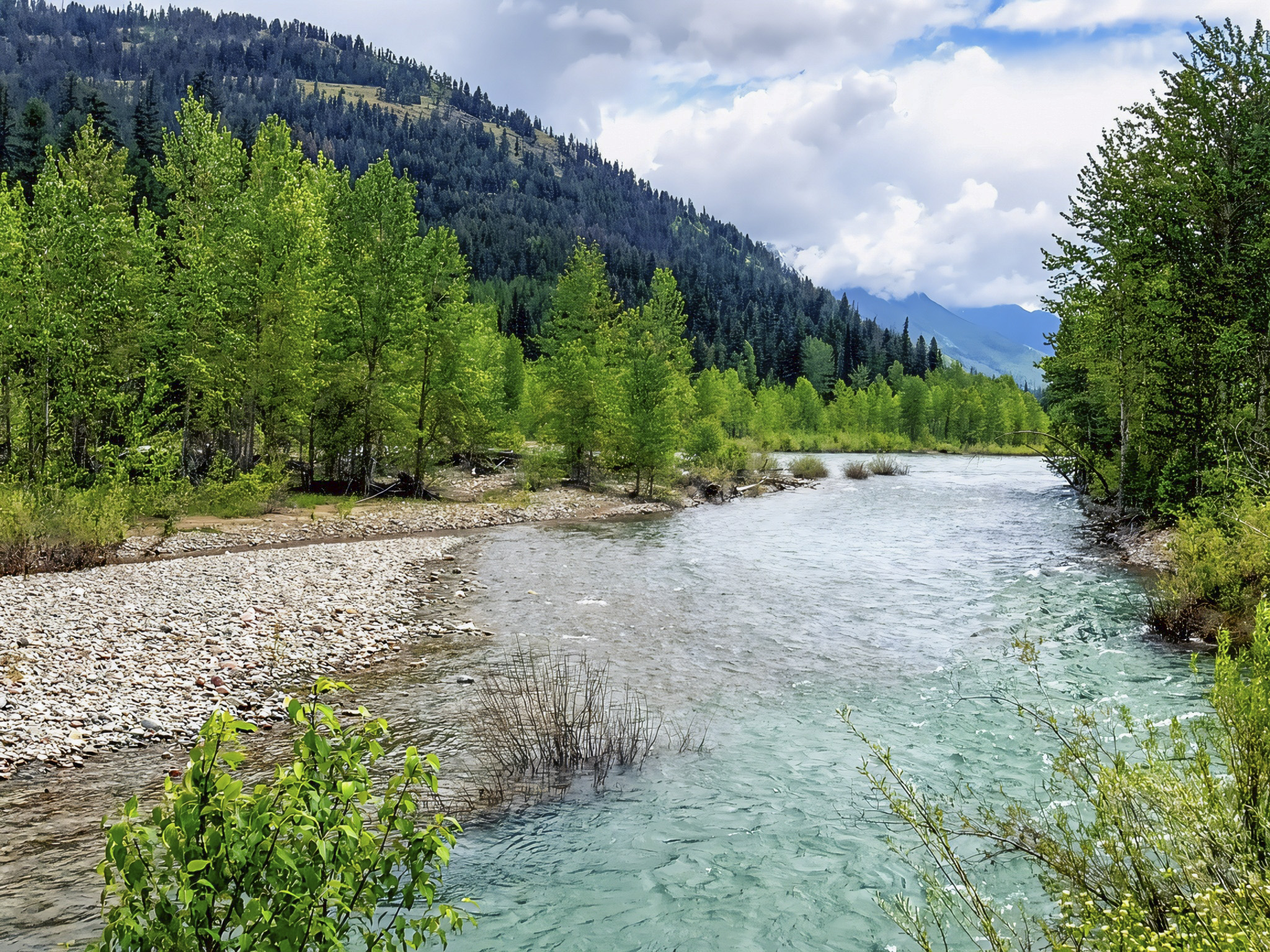
Beyond its geological importance, Lake McDonald supports a freshwater ecosystem connected to the rivers, forests, and mountain habitats of Glacier National Park. The surrounding landscape provides habitat for numerous plant and animal species, while the lake’s cold waters support aquatic organisms adapted to mountain environments. However, protecting this ecosystem requires continued attention to invasive species. According to the National Park Service, nonnative lake trout have negatively affected native bull trout populations in several western Glacier lakes, illustrating how introduced species can alter freshwater food webs. Zebra and quagga mussels are additional threats because they can spread through contaminated boats and equipment and disrupt aquatic ecosystems if introduced. To reduce these risks, the park requires aquatic invasive species inspections and permits for watercraft launches. Visitors are encouraged to clean, drain, and dry their equipment before entering park waters. Lake McDonald therefore offers more than recreational opportunities; it provides a valuable place to understand the connections among ancient geology, freshwater biodiversity, and environmental conservation (NPS, n.d.-f, n.d.-g).


References
National Park Service. (n.d.-a). Lake McDonald Valley. U.S. Department of the Interior. https://www.nps.gov/glac/planyourvisit/lakemcdonald.htm
National Park Service. (n.d.-b). Lakes and ponds. U.S. Department of the Interior. https://www.nps.gov/glac/learn/nature/lakesandponds.htm
National Park Service. (n.d.-c). Apgar Village. U.S. Department of the Interior. https://www.nps.gov/places/apgar-village.htm
National Park Service. (n.d.-d). Geologic formations. U.S. Department of the Interior. https://www.nps.gov/glac/learn/nature/geologicformations.htm
National Park Service. (n.d.-e). Geology. U.S. Department of the Interior. https://www.nps.gov/glac/learn/education/geology.htm
National Park Service. (n.d.-f). Boating information & permits. U.S. Department of the Interior. https://www.nps.gov/glac/planyourvisit/boating.htm
National Park Service. (n.d.-g). Aquatic resources. U.S. Department of the Interior. https://home.nps.gov/glac/learn/education/aquatic_resources.htm
AI Disclosure Statement:
Artificial intelligence tools were used in the creation of this page, including elements such as writing, image enhancement/generation, voice enhancement, and/or editing support. All final creative decisions were made by the creator.

Leave a Reply