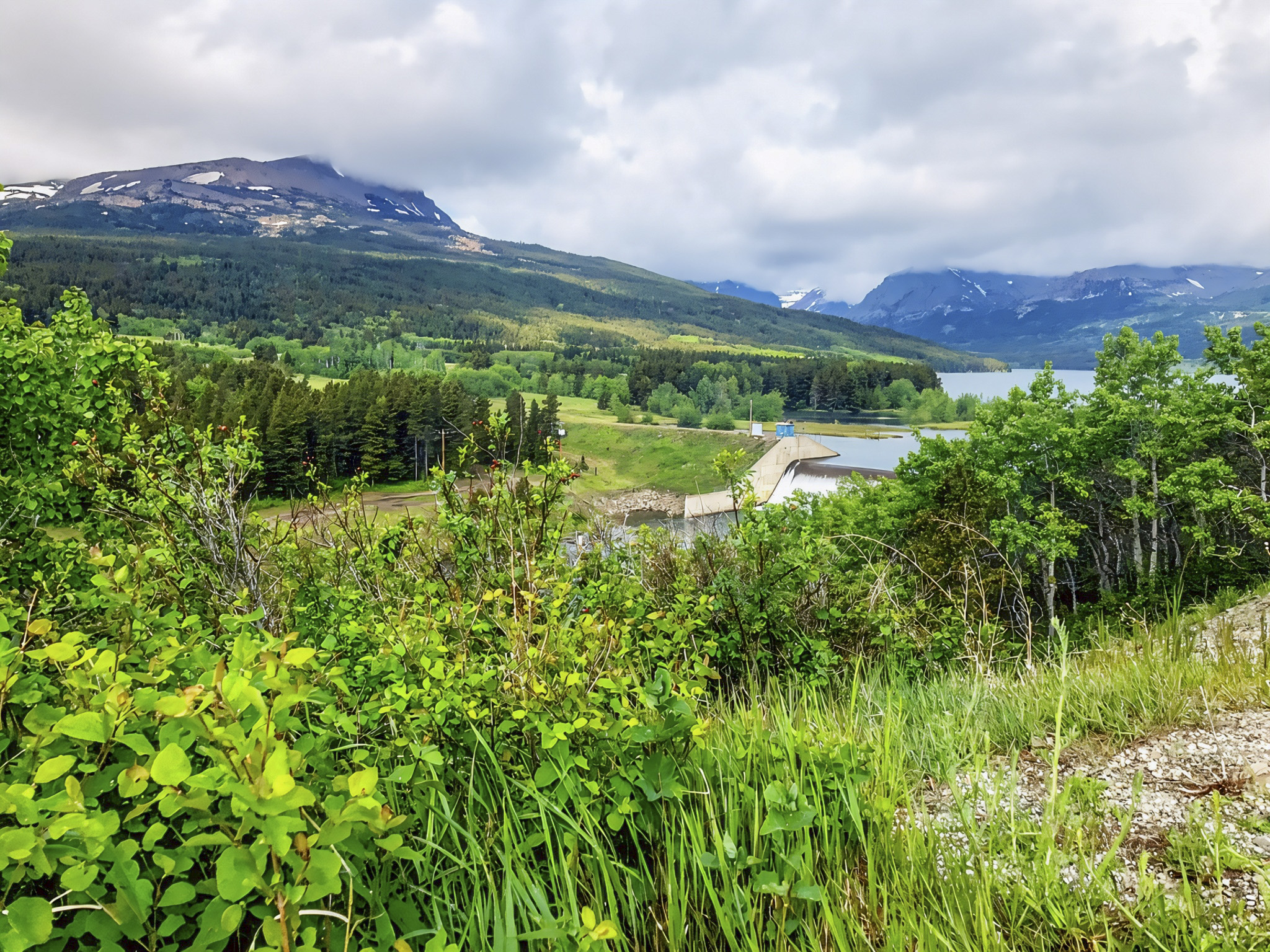

East Glacier Park Village, located in northwestern Montana, is a scenic mountain community near the eastern boundary of Glacier National Park. Traveling west along U.S. Highway 2, visitors encounter a remarkable geographical transition where the open grasslands of the Great Plains meet the rugged peaks of the Rocky Mountains. The village lies within the Blackfeet Indian Reservation, a region with deep cultural and historical significance. The Blackfeet people have lived in this area for thousands of years and traditionally called the Rocky Mountains the “Backbone of the World.” The arrival of the Great Northern Railway helped develop tourism in the region, while the establishment of Glacier National Park brought greater national attention to its natural landscapes. Today, East Glacier serves as a gateway for travelers interested in mountain scenery, Indigenous history, outdoor recreation, and the natural sciences (National Park Service [NPS], n.d.-a, n.d.-b).
The mountains surrounding East Glacier contain an extraordinary geological history extending more than a billion years into the past. Many of their sedimentary rocks formed from materials deposited in an ancient inland sea long before the modern Rocky Mountains existed. Later, powerful tectonic forces compressed the Earth’s crust, pushing older rock layers over younger formations along a major geological feature called the Lewis Overthrust Fault. This movement helped create the Rocky Mountain landscape, while massive glaciers during the Ice Age carved deep valleys, steep cliffs, and mountain basins. As the glaciers retreated, they left behind distinctive landforms and lakes that remain important features of the region. These geological processes make the East Glacier area an excellent destination for travelers interested in understanding how plate tectonics, erosion, and ancient climate changes shape Earth’s surface (NPS, n.d.-c).

The East Glacier region also supports remarkable biodiversity because several major ecological environments meet along the eastern Rocky Mountains. Open prairie grasslands gradually transition into aspen woodlands, lodgepole pine forests, subalpine vegetation, and alpine tundra at higher elevations. Differences in temperature, moisture, elevation, and wind influence which plants and animals can survive in each habitat. Glacier National Park provides important habitat for grizzly bears, black bears, elk, mountain goats, and numerous bird species. Forests offer shelter and food for wildlife, while grasslands and mountain meadows support flowering plants, insects, and grazing animals. Natural disturbances such as wildfires also help maintain ecological diversity by allowing new vegetation to grow and creating different stages of forest development. This combination of habitats makes the region an important area for studying ecology, biodiversity, and the relationships between organisms and their environment (NPS, n.d.-d).
For travelers, East Glacier offers several opportunities to experience the natural and historical attractions of Montana’s Rocky Mountain Front. The village provides access to scenic roads, mountain viewpoints, and the nearby Two Medicine area of Glacier National Park. Visitors can explore hiking trails, waterfalls, forests, and lakes while learning about the region’s geological and ecological history. Along Two Medicine Road, the Lower Two Medicine Lake watershed offers another perspective on the importance of mountain water resources and their connections to surrounding ecosystems. Farther into Glacier National Park, the Two Medicine area offers destinations such as Running Eagle Falls, Two Medicine Lake, and trails leading toward alpine environments. Travelers can also discover the region’s railroad heritage through East Glacier’s historic role as a rail gateway. Whether exploring mountain landscapes, observing wildlife, or learning about the forces that shaped the Rocky Mountains, East Glacier offers a rewarding combination of travel, history, and science (NPS, n.d.-e).


References
National Park Service. (n.d.-a). A brief history of the east side of Glacier National Park. U.S. Department of the Interior. https://www.nps.gov/glac/learn/education/east_side_history.htm
National Park Service. (n.d.-b). History & culture. Glacier National Park. U.S. Department of the Interior. https://home.nps.gov/glac/learn/historyculture/index.htm
National Park Service. (n.d.-c). Geologic formations. Glacier National Park. U.S. Department of the Interior. https://www.nps.gov/glac/learn/nature/geologicformations.htm
National Park Service. (n.d.-d). Plants and animals. Glacier National Park. U.S. Department of the Interior. https://www.nps.gov/glac/learn/education/plants-and-animals.htm
National Park Service. (n.d.-e). Places to go. Glacier National Park. U.S. Department of the Interior. https://www.nps.gov/glac/planyourvisit/placestogo.htm
AI Disclosure Statement:
Artificial intelligence tools were used in the creation of this page, including elements such as writing, image enhancement/generation, voice enhancement, and/or editing support. All final creative decisions were made by the creator.
Leave a Reply