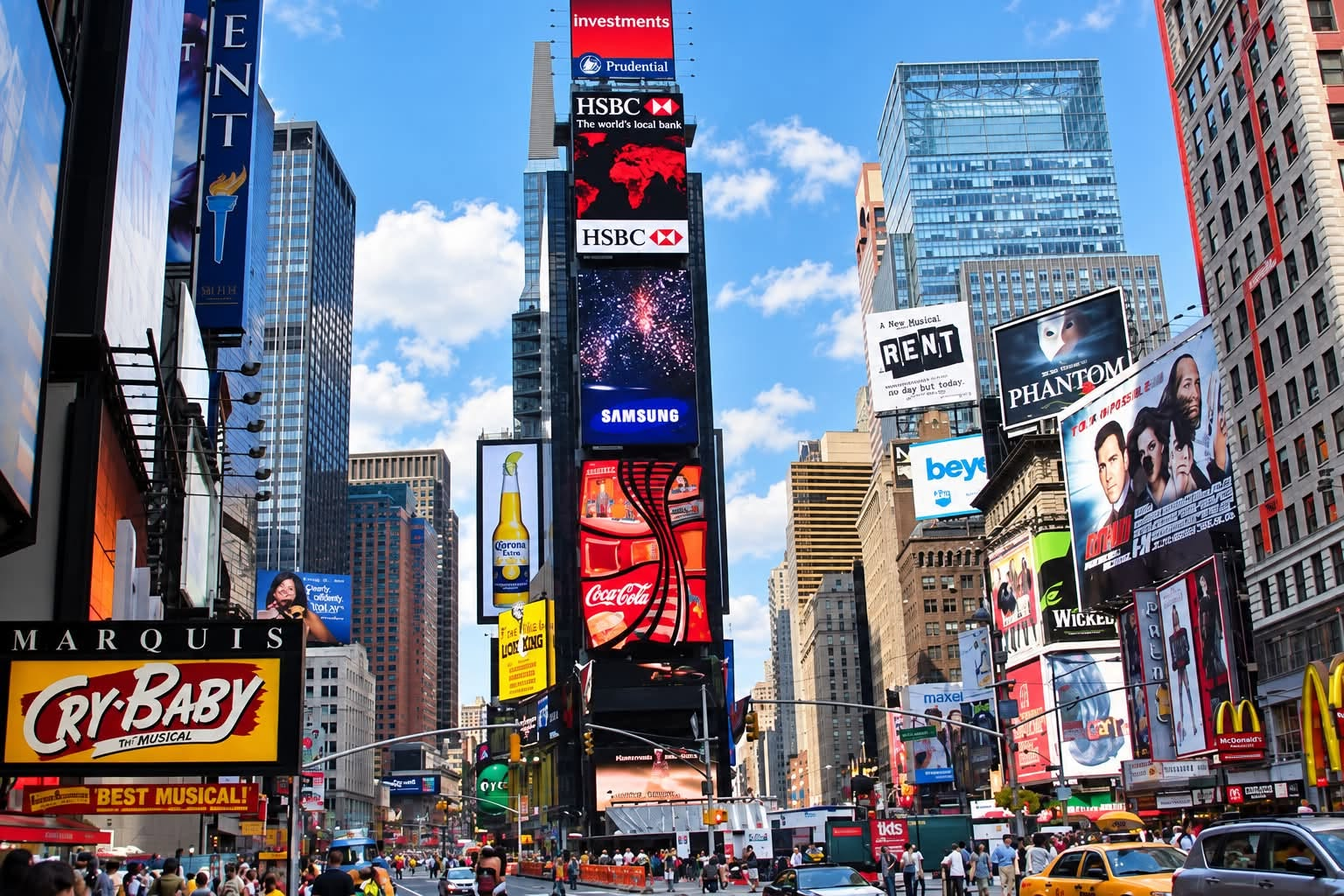

One fascinating fact about Times Square in New York City is that it was originally called Longacre Square. It was renamed Times Square in 1904 after The New York Times moved its headquarters to the newly built Times Tower, now known as One Times Square. That same year, a huge New Year’s Eve celebration was held there, reportedly drawing more than 200,000 people.
The famous New Year’s Eve Ball Drop did not begin until 1907. The original ball was made of iron and wood, measured about 5 feet (1.5 m) across, weighed roughly 700 pounds, and was illuminated by 100 light bulbs. Interestingly, the idea of dropping a ball to mark an exact time was inspired by maritime “time-balls,” including one installed at the Royal Observatory in Greenwich, England, in 1833 so ships could synchronize their clocks.
The tradition has continued for more than a century, but the illuminated ball was not dropped in 1942 or 1943 because New York City was observing a wartime lighting “dimout.” Crowds still gathered, marking midnight with a minute of silence followed by chimes.
Today’s Constellation Ball, introduced in 2025, is dramatically larger than the original: it measures 12.5 feet in diameter, weighs 12,350 pounds, and contains 5,280 crystals and LED light pucks. Times Square itself has also become much more pedestrian-oriented; NYC DOT lists the Times Square pedestrian plaza along Broadway from roughly 41st to 53rd Streets.
Sources: Times Square Alliance — New Year’s Eve and Ball History · NYC Department of Transportation — Pedestrian Plazas
AI Disclosure Statement:
Artificial intelligence tools were used in the creation of this page, including elements such as writing, image enhancement, voice enhancement, and/or editing support. All final creative decisions were made by the creator.


Leave a Reply