

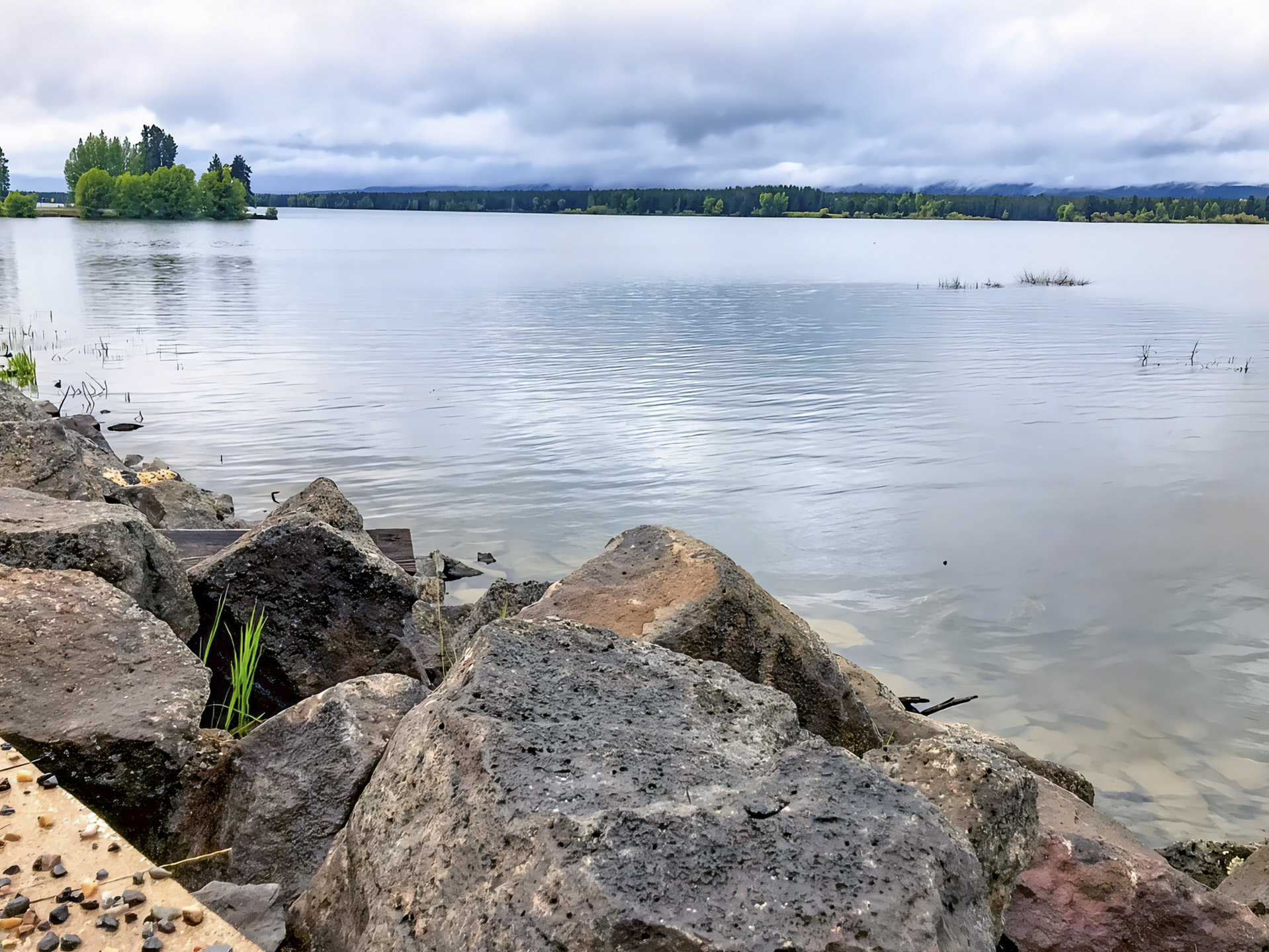
The Henrys Fork of the Snake River is one of eastern Idaho’s most remarkable waterways, flowing through the scenic Island Park region near Yellowstone National Park. This river is famous for its clear waters, trout fishing, and diverse wildlife. Its upper reaches are fed by Big Springs and the Henrys Lake Outlet, while its course passes through forests, wetlands, volcanic landscapes, and beautiful mountain valleys. Island Park lies within the Greater Yellowstone Ecosystem, a region known for its rich biodiversity and fascinating geological history. The surrounding landscape was shaped partly by ancient volcanic activity associated with the Island Park caldera, which influenced the area’s terrain, waterways, and natural habitats. The river is also an important recreational and ecological resource, providing habitat for aquatic organisms while supporting tourism and local communities (Idaho Department of Fish and Game [IDFG], n.d.-a; U.S. Bureau of Reclamation, n.d.).
For travelers, the Henrys Fork offers a relaxing destination where outdoor recreation and wildlife observation come together. Visitors to the Island Park area can enjoy fishing, canoeing, kayaking, rafting, riverside walks, and birdwatching. The river is especially popular among fly-fishing enthusiasts because of its trout populations and productive aquatic insect communities. Nearby attractions include Big Springs, Island Park Reservoir, and Harriman State Park, where trails wind through meadows, forests, and riverbanks. Travelers should expect changing mountain weather, cool temperatures, and varying river conditions. Although some sections are suitable for gentle floats, other stretches contain faster currents and rapids, making it important to check local conditions before entering the water. Wildlife encounters are also possible, including moose, deer, and numerous bird species. Visitors should observe animals from a safe distance, respect private property, and use designated public access areas (Idaho Department of Parks and Recreation [IDPR], n.d.-a; Recreation.gov, n.d.).

Scientifically, the Henrys Fork is an interesting example of how geology, hydrology, and aquatic ecology interact. Groundwater emerging from springs contributes to the river’s flow, while precipitation, snowmelt, and water management influence the amount and movement of water throughout the system. Water temperature, dissolved oxygen, nutrients, and streamflow affect the organisms living in the river. The Henry’s Fork Foundation conducts scientific monitoring of water quality, aquatic insects, fish habitats, and river conditions to better understand these relationships. Aquatic insects, including mayflies, caddisflies, and stoneflies, are particularly important because they form part of the river’s food web and provide food for trout and other aquatic animals. Their abundance and community composition can also help researchers evaluate environmental conditions. Understanding these ecological relationships is essential because changes in water temperature, sediment, and river flow can influence aquatic habitats and fisheries (Henry’s Fork Foundation [HFF], n.d.; Idaho Department of Environmental Quality [IDEQ], n.d.).
The biology of the Henrys Fork extends far beyond its famous trout populations. Its aquatic habitats support fish such as rainbow trout (Oncorhynchus mykiss), brook trout (Salvelinus fontinalis), and mountain whitefish (Prosopium williamsoni). The surrounding wetlands, grassy meadows, and coniferous forests provide important habitat for birds and mammals. One particularly interesting species found around Island Park is the American white pelican (Pelecanus erythrorhynchos), a large waterbird that often gathers in groups while searching for fish. Unlike diving pelicans, American white pelicans typically capture fish by dipping their bills into the water and may cooperate while feeding. Research and observations by the Henry’s Fork Foundation indicate that pelicans around Island Park consume fish such as suckers, highlighting their role as predators within the aquatic food web. The region also supports trumpeter swans, double-crested cormorants, and other waterbirds. For nature lovers and science enthusiasts, the Henrys Fork offers an opportunity to appreciate how freshwater ecosystems connect fish, insects, birds, vegetation, and the surrounding landscape into a complex natural community (HFF, 2025; IDFG, n.d.-b; IDPR, n.d.-b).


References
Henry’s Fork Foundation. (2025). Pelicans in Island Park. https://henrysfork.org/post/pelicans-in-island-park
Henry’s Fork Foundation. (n.d.). Aquatic ecology and water quality. https://henrysfork.org/work/aquatic-ecology-and-water-quality
Idaho Department of Environmental Quality. (n.d.). Henrys Fork (Upper and Lower) subbasin. https://www.deq.idaho.gov/water-quality/surface-water/total-maximum-daily-loads/henrys-fork-upper-and-lower-subbasin
Idaho Department of Fish and Game. (n.d.-a). Henry’s Fork Chapter. https://idfg.idaho.gov/master-naturalist/chapter/henrys-fork
Idaho Department of Fish and Game. (n.d.-b). Henrys Fork Snake River. https://idfg.idaho.gov/ifwis/fishingplanner/water/1119497437574
Idaho Department of Parks and Recreation. (n.d.-a). Harriman State Park. https://parksandrecreation.idaho.gov/state-park/harriman-state-park
Idaho Department of Parks and Recreation. (n.d.-b). Bird watching. https://parksandrecreation.idaho.gov/park-activity/bird-watching
Recreation.gov. (n.d.). Riverside (ID–Targhee), Caribou-Targhee National Forest. https://www.recreation.gov/camping/campgrounds/232222
U.S. Bureau of Reclamation. (n.d.). Island Park Dam. https://www.usbr.gov
AI Disclosure Statement:
Artificial intelligence tools were used in the creation of this page, including elements such as writing, image enhancement/generation, voice enhancement, and/or editing support. All final creative decisions were made by the creator.
Leave a Reply