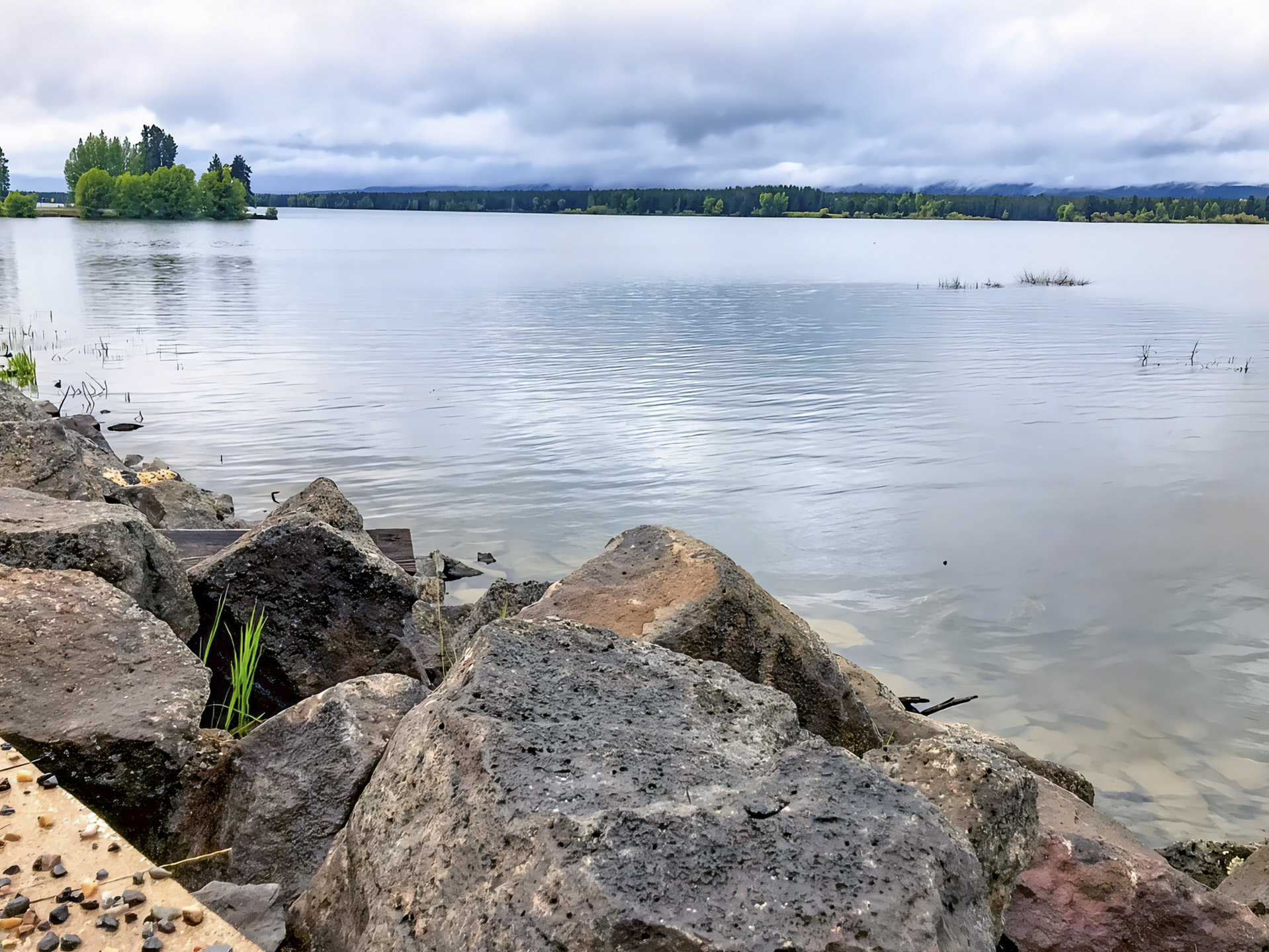

Located in the scenic highlands of eastern Idaho, Island Park Reservoir is a popular destination for travelers interested in nature, outdoor recreation, and science. Situated along the Henrys Fork of the Snake River in Fremont County, the reservoir covers approximately 7,000 acres when full and has about 64 miles of shoreline. It lies within the greater Island Park region, surrounded by the forests, meadows, and volcanic terrain of the Caribou-Targhee National Forest. The reservoir is an important source of irrigation water for agricultural communities downstream and provides recreational opportunities for visitors exploring the Greater Yellowstone region. Its location near the Idaho-Montana border makes it an attractive stop for travelers interested in discovering the natural landscapes of the northern Rocky Mountains (Bureau of Reclamation, n.d.; Recreation.gov, n.d.-a).
Island Park Reservoir offers numerous outdoor activities, including fishing, boating, kayaking, camping, and wildlife watching. Travelers can reach the area from U.S. Highway 20, which connects Ashton, Idaho, with West Yellowstone, Montana. Several developed recreation areas, including Buttermilk and McCrea Bridge campgrounds, provide camping facilities and access to the water. Fishing is particularly popular because the reservoir supports species such as rainbow trout, cutthroat trout, kokanee salmon, and yellow perch. Visitors can also explore nearby destinations such as Big Springs, Harriman State Park, and Mesa Falls, each offering opportunities to learn about the area’s freshwater ecosystems and natural history. However, reservoir water levels fluctuate with irrigation demands, potentially affecting boat access and shoreline activities. Travelers should check current conditions and any water-quality advisories before visiting (Recreation.gov, n.d.-a, n.d.-b, n.d.-c).

The history of Island Park Reservoir is closely connected to agricultural development and water management in the Snake River Basin. Island Park Dam was constructed between 1937 and 1939 as part of the U.S. Bureau of Reclamation’s Minidoka Project, which supplies water for irrigation in eastern Idaho. The dam is a large earthfill structure designed to store and regulate water from the Henrys Fork. Hydroelectric generation was later added, allowing released water to produce electricity. Beyond its engineering history, the surrounding landscape has a much older geological story. Island Park lies within a region shaped by massive volcanic eruptions associated with the Yellowstone volcanic system. The Henrys Fork Caldera is nested within the larger Island Park Caldera, and the foundation of Island Park Dam contains rhyolite and basalt, two types of volcanic rock. These geological features demonstrate how ancient volcanic processes helped shape the modern landscape and influence the distribution of rivers, forests, and freshwater habitats (Bureau of Reclamation, n.d.; Recreation.gov, n.d.-b).
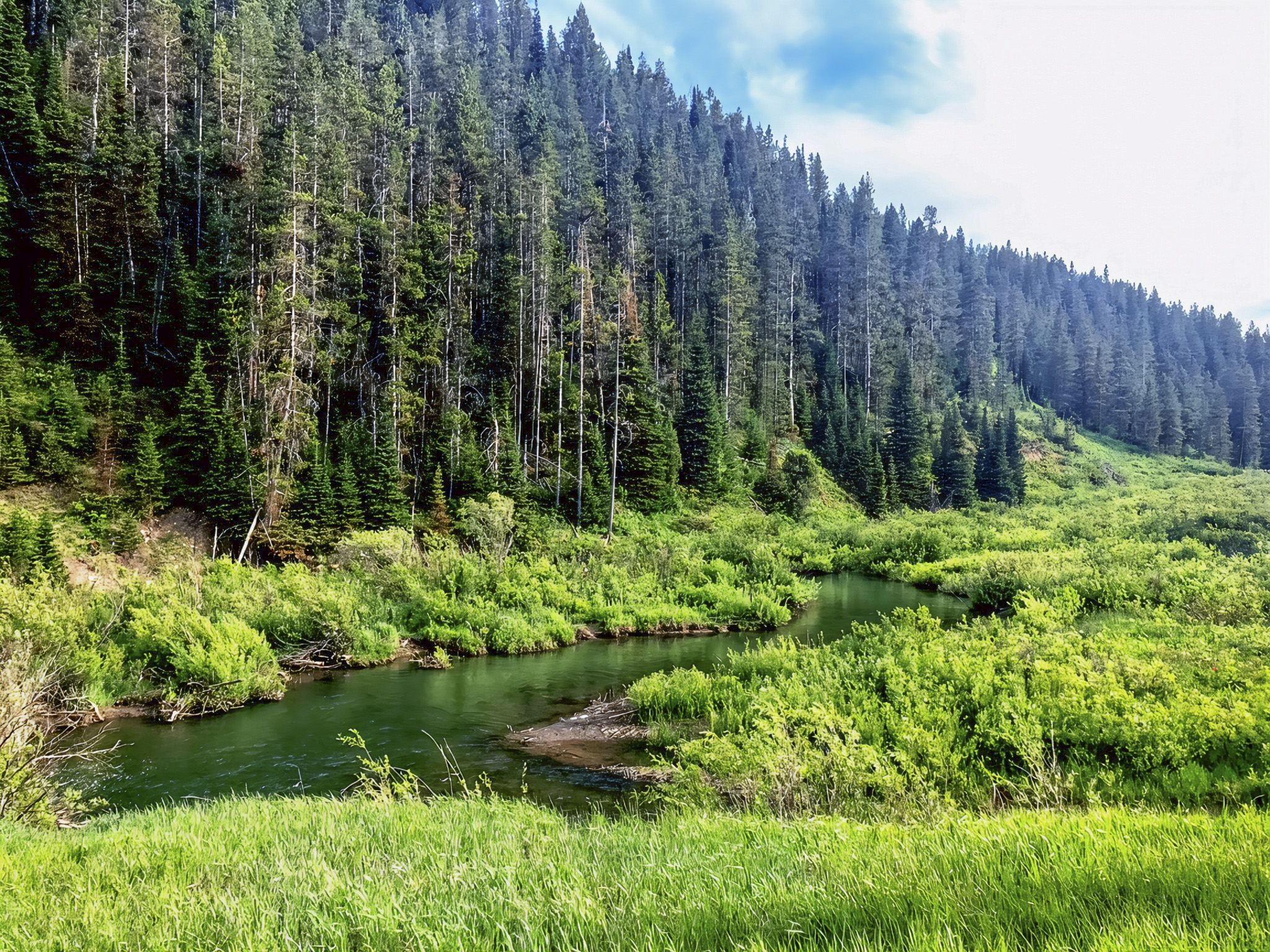
From a biological perspective, Island Park Reservoir and its surrounding watershed support a diverse network of aquatic and terrestrial ecosystems. Lodgepole pine forests, grassy meadows, and wetland habitats provide suitable environments for wildlife such as moose, elk, deer, bald eagles, sandhill cranes, and bears. The reservoir and Henrys Fork are also important habitats for trout, aquatic insects, algae, and other freshwater organisms. Scientists studying the watershed have found that water temperature, dissolved oxygen, nutrient concentrations, and reservoir management strongly influence aquatic life. Research and monitoring by the Henry’s Fork Foundation indicate that warmer conditions and excessive nutrients have contributed to declining water quality and increased algal blooms in Island Park Reservoir. These changes can reduce oxygen availability and threaten fish habitat, particularly during warmer periods. Conservation efforts now focus on improving water quality, understanding nutrient movement, and maintaining healthy river ecosystems. For science-loving travelers, Island Park offers an opportunity to appreciate how geology, freshwater biology, climate, and human water management are closely connected (Henry’s Fork Foundation, 2024; Morrisett, 2026; Recreation.gov, n.d.-b).


References
Bureau of Reclamation. (n.d.). Island Park Dam. U.S. Department of the Interior. https://www.usbr.gov
Henry’s Fork Foundation. (2024). Island Park Reservoir 101: How it works. https://henrysfork.org/post/island-park-reservoir-101-how-it-works
Morrisett, C. (2026). History of water quality in Island Park Reservoir. Henry’s Fork Foundation. https://henrysfork.org/post/history-island-park-reservoir-water-quality
Recreation.gov. (n.d.-a). Island Park Reservoir. https://www.recreation.gov/gateways/111
Recreation.gov. (n.d.-b). Buttermilk Campground, Caribou-Targhee National Forest. https://www.recreation.gov/camping/campgrounds/233826
Recreation.gov. (n.d.-c). McCrea Bridge Campground, Caribou-Targhee National Forest. https://www.recreation.gov/camping/campgrounds/231926
AI Disclosure Statement:
Artificial intelligence tools were used in the creation of this page, including elements such as writing, image enhancement/generation, voice enhancement, and/or editing support. All final creative decisions were made by the creator.
Leave a Reply