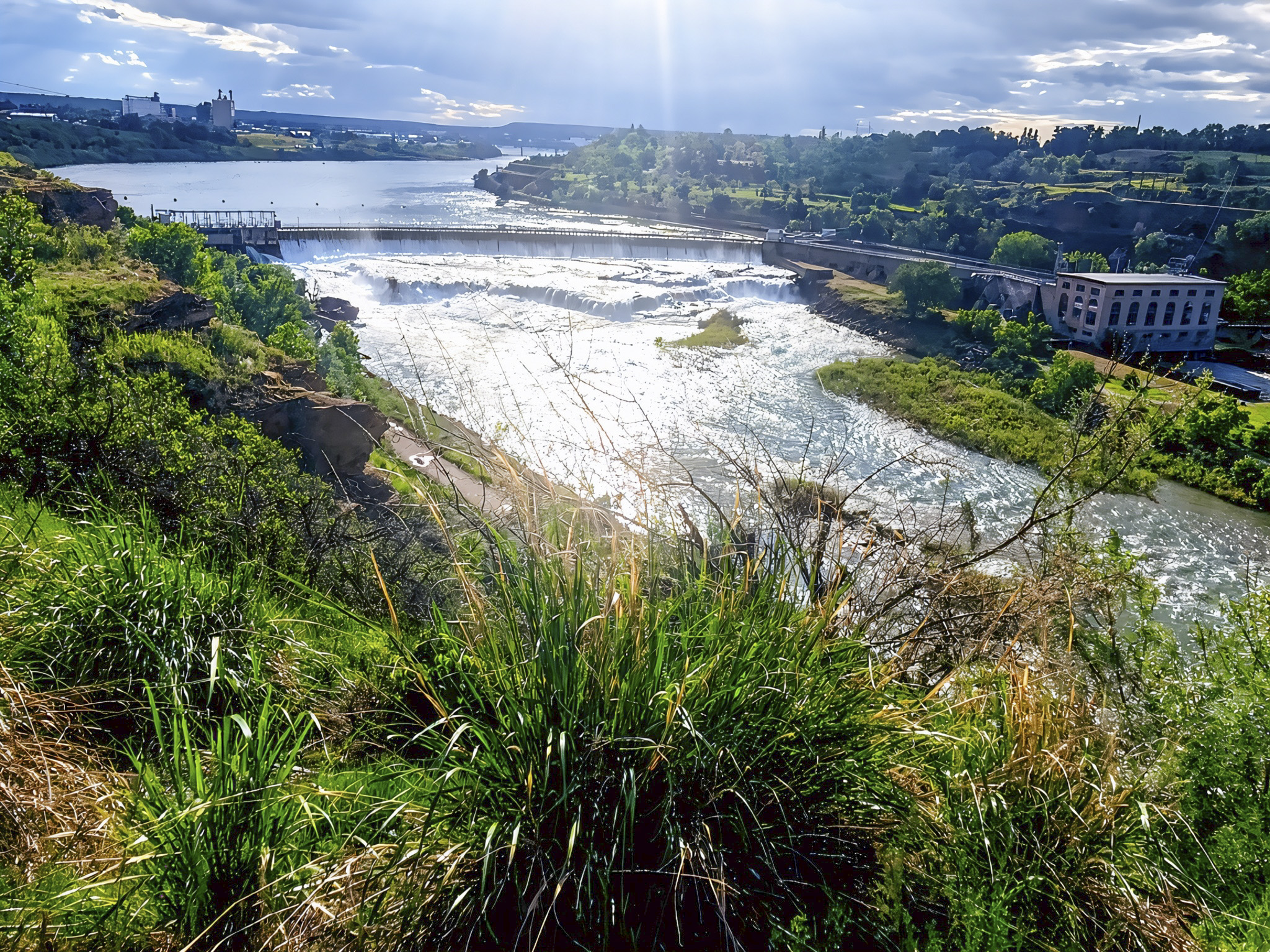

Located along the Missouri River in Great Falls, Montana, Black Eagle Falls is a remarkable destination where natural beauty, history, and science come together. It is one of five major waterfalls along this section of the Missouri River and was an important landmark during the Lewis and Clark Expedition. Originally known as the Upper Pitch, the waterfall was later named Black Eagle Falls after an eagle’s nest was observed in a cottonwood tree on an island near the falls. The natural waterfall drops approximately 26 feet, although its original appearance has changed because of hydroelectric development. Today, Black Eagle Falls remains an interesting destination for travelers who enjoy exploring rivers, historic landmarks, and Montana’s natural landscapes (National Park Service, n.d.).
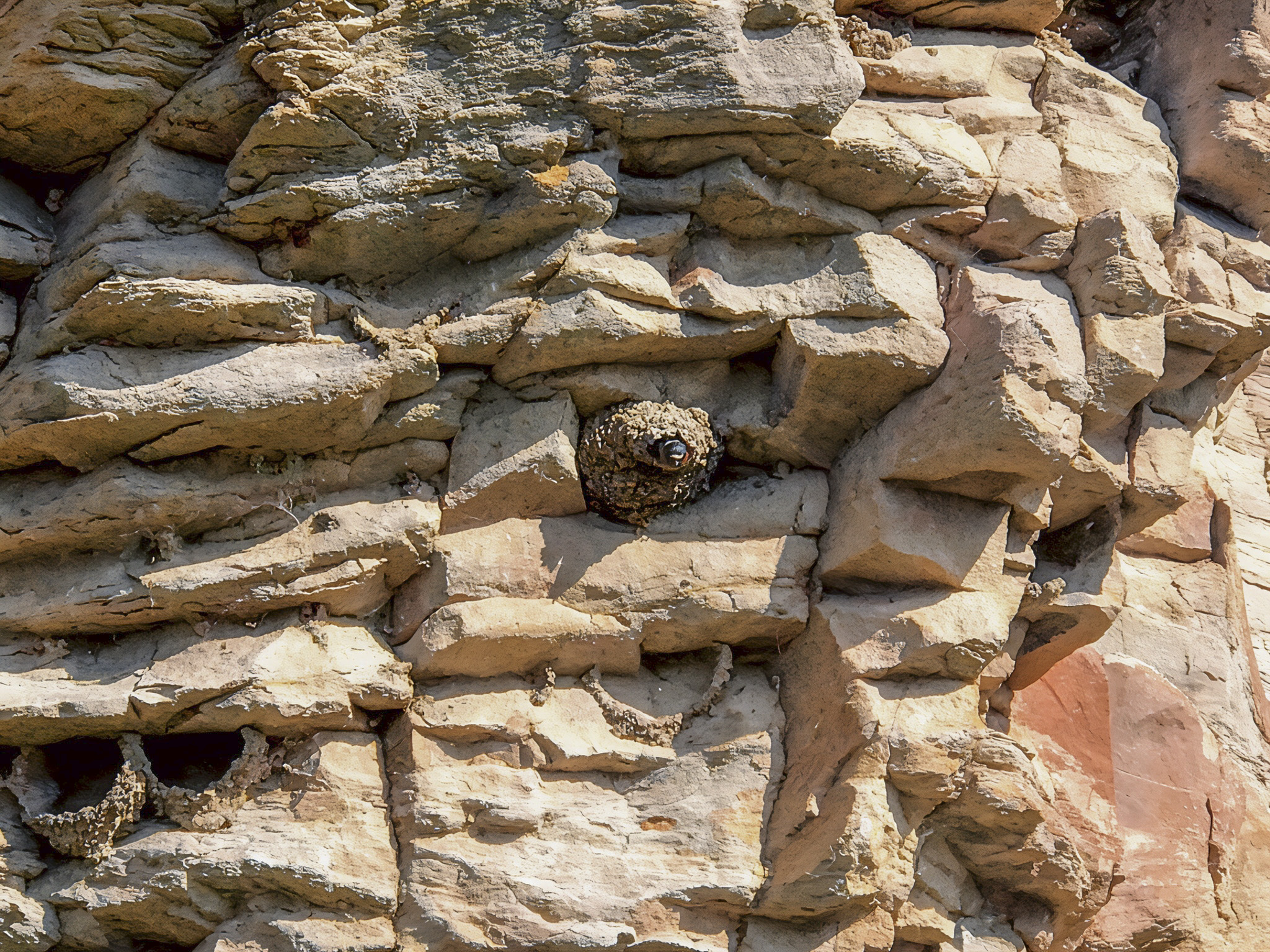
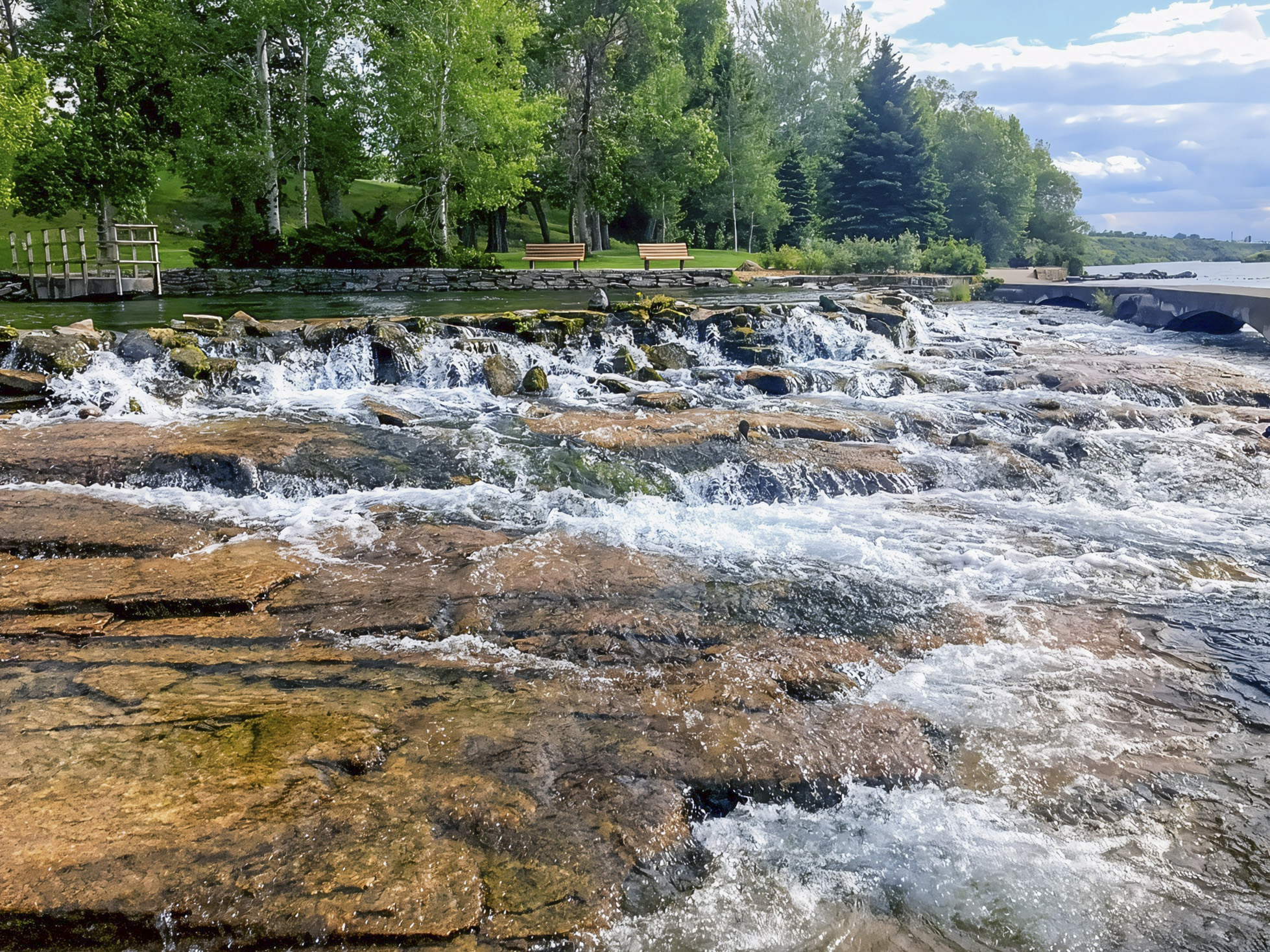
The geology surrounding Black Eagle Falls helps explain why the Missouri River developed a series of waterfalls and rocky channels in this region. Over geological time, flowing water has eroded bedrock, transported sediment, and shaped the surrounding river valley. The Great Falls region contains sedimentary rock formations, including sandstone and shale, that formed through ancient geological processes. Differences in rock resistance can influence how quickly a river erodes its channel, contributing to the formation of rocky ledges, rapids, and waterfalls. These natural processes demonstrate how rivers continually shape Earth’s surface through erosion and sediment transport. The exposed rock formations and river valley also provide opportunities for visitors to learn about the region’s geological history (U.S. Geological Survey, 1909).

Black Eagle Falls also played an important role in Montana’s industrial development. The construction of Black Eagle Dam transformed the Missouri River into a source of hydroelectric power, using moving water to generate electricity. The hydroelectric facility currently has a generating capacity of approximately 21 megawatts and is part of a larger network of dams along the river (NorthWestern Energy, n.d.). Nearby, the historic Anaconda Copper Smelter and Refinery became an important center for processing copper ore transported from Butte, Montana. The operation supported industrial growth and employment but also produced waste containing metals such as arsenic and lead. Following the refinery’s closure, environmental investigations identified contamination in nearby soil and water, leading to cleanup efforts under the federal Superfund program. This history illustrates both the economic importance of mineral resources and the environmental challenges associated with industrial activities (U.S. Environmental Protection Agency, n.d.).
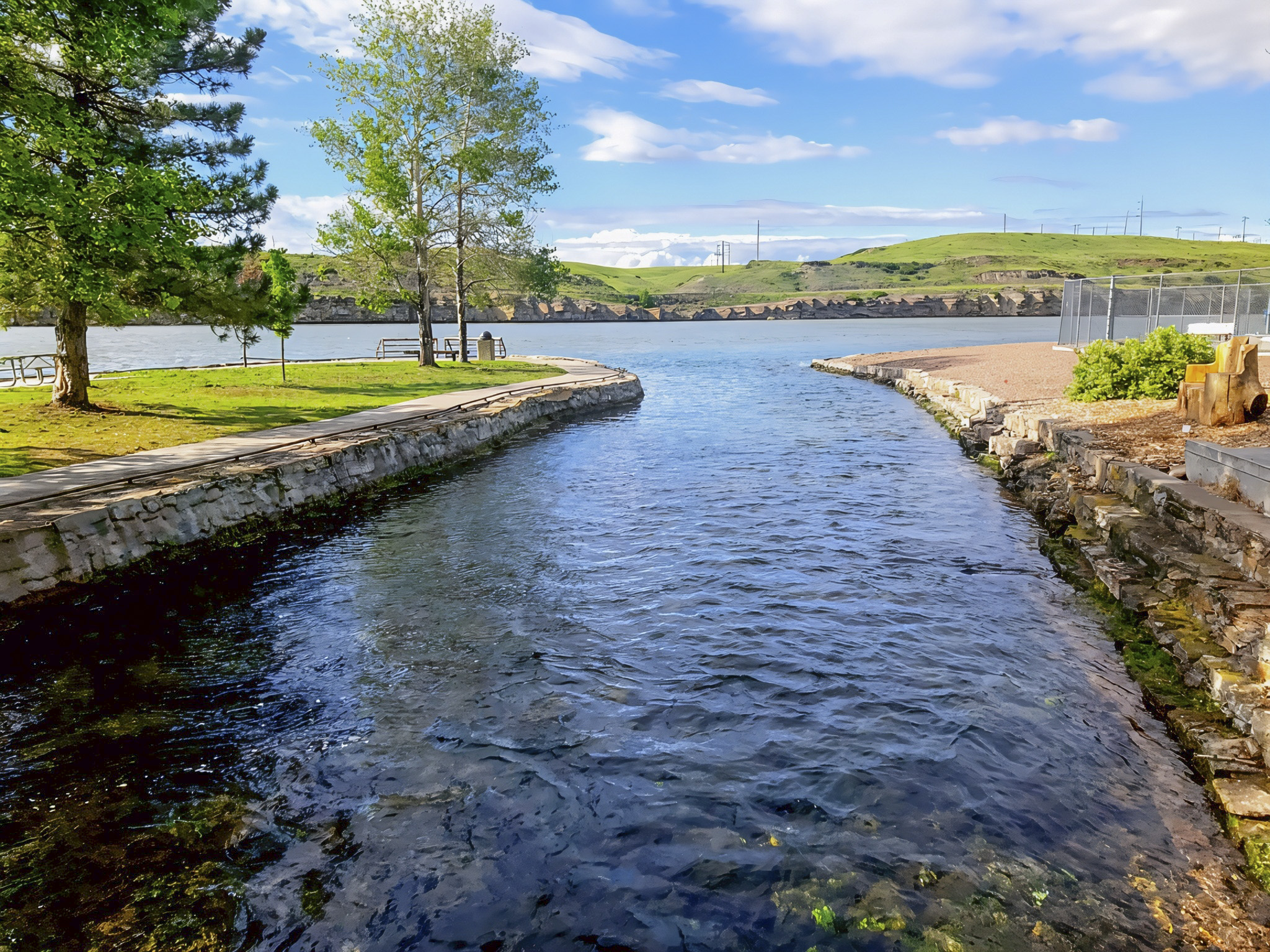
For travelers, Black Eagle Falls offers opportunities to experience Montana’s river scenery while learning about hydropower, geology, ecology, and local history. The nearby River’s Edge Trail provides walking and cycling routes along the Missouri River, connecting parks, scenic viewpoints, and historical attractions. Visitors can explore Black Eagle Memorial Island, observe the flowing river, and learn about the area’s industrial past through interpretive displays. The surrounding river corridor also provides habitat for birds and other wildlife, highlighting the ecological importance of freshwater environments. The combination of recreational pathways, historic structures, and natural features makes Black Eagle Falls an excellent destination for travelers and science lovers interested in understanding how rivers influence landscapes, ecosystems, and human communities (City of Great Falls, n.d.; Great Falls Montana Tourism, n.d.).


References
City of Great Falls. (n.d.). River’s Edge Trail. https://greatfallsmt.gov/593/Rivers-Edge-Trail
Great Falls Montana Tourism. (n.d.). The falls. https://visitgreatfallsmontana.org/the-falls
National Park Service. (n.d.). The five falls of the Missouri. U.S. Department of the Interior. https://www.nps.gov/articles/000/the-five-falls-of-the-missouri.htm
NorthWestern Energy. (n.d.). Black Eagle. https://northwesternenergy.com/black-eagle
U.S. Environmental Protection Agency. (n.d.). ACM Smelter and Refinery: Cleanup activities. https://cumulis.epa.gov/supercpad/SiteProfiles/index.cfm?fuseaction=second.cleanup&id=0800402
U.S. Geological Survey. (1909). Geology and water resources of the Great Falls region, Montana (Water-Supply Paper 221). https://pubs.usgs.gov/wsp/0221/report.pdf
AI Disclosure Statement:
Artificial intelligence tools were used in the creation of this page, including elements such as writing, image enhancement/generation, voice enhancement, and/or editing support. All final creative decisions were made by the creator.
Leave a Reply