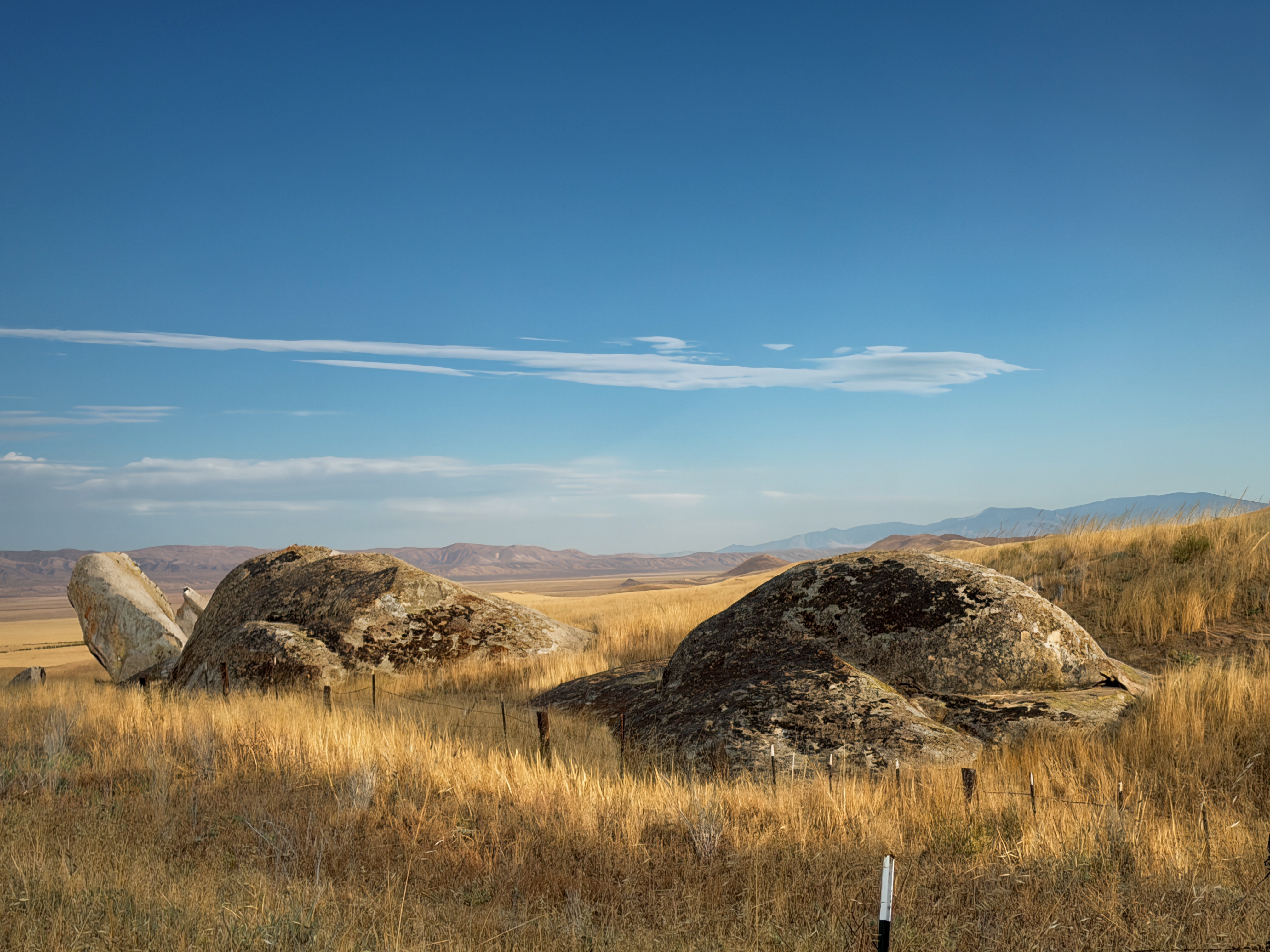

Carrizo Plain National Monument protects more than 211,000 acres of open grassland, dry lakebeds, rugged hills, and important cultural sites in eastern San Luis Obispo County. The Selby Road area crosses the western side of the plain and climbs toward Selby Rocks and the Caliente Range, offering broad views toward the Temblor Range. Its prominent outcrops are thick, erosion-resistant sandstones of the Painted Rock Member of the Vaqueros Formation, deposited along an ancient shoreline during the late Oligocene and early Miocene epochs. Across the valley, the remarkably visible San Andreas Fault marks the boundary between the Pacific and North American tectonic plates (Chipping & Friends of the Carrizo Plain, 2022; U.S. Geological Survey [USGS], n.d.). Travelers can reach Selby Campground by following Selby Road approximately 4.5 miles from Soda Lake Road. Camping is free and first-come, first-served, but visitors should carry drinking water, food, fuel, and emergency supplies because the monument has no visitor services and cell reception is unreliable. Unpaved roads can become muddy and impassable following rain (Bureau of Land Management [BLM], n.d.).
Although the landscape appears dry, its grasslands and shrubs support tule elk, pronghorn, coyotes, San Joaquin kit foxes, black-tailed jackrabbits, burrowing owls, giant kangaroo rats, and blunt-nosed leopard lizards. Many are adapted to extreme heat and limited water, while shrubs provide shade, food, nesting cover, and refuge from predators. Recent camera-trap research published in 2025, including study sites in Carrizo Plain, found that greater shrub density generally increased both wildlife activity and vertebrate species richness, suggesting that native shrubs may help animals withstand hotter and drier conditions (Zuliani et al., 2025). Another recent study successfully identified individual endangered giant kangaroo rats using DNA from fresh fecal pellets, producing population estimates similar to traditional live trapping and offering a safer way to monitor this important grassland species (Bean et al., 2024). Ongoing Cal Poly research is also examining why tule elk are increasing while the local pronghorn population remains small, with drought, limited water, forage availability, fences, and coyote predation among the possible factors (Wilson, 2025).


References:
Bean, W. T., Statham, M. J., Treiber, M., Claflin, W. B., Fiehler, C. M., & Sacks, B. N. (2024). Fecal genotyping to estimate small mammal population size, with a comparison to live mark-recapture estimates. California Fish and Wildlife Journal, 110, e1.
Bureau of Land Management. (n.d.). Carrizo Plain National Monument.
Bureau of Land Management. (n.d.). Selby Campground.
Chipping, D., & Friends of the Carrizo Plain. (2022). Geologic road guide to Soda Lake Road.
U.S. Geological Survey. (n.d.). San Andreas Fault at Wallace Creek.
Wilson, N. (2025, April 8). Thriving vs. surviving. California Polytechnic State University.
Zuliani, M., Ghazian, N., MacDonald, S. E., & Lortie, C. J. (2025). The shrub density effect: Unraveling vertebrate community dynamics along an aridity gradient in Southern California. Frontiers in Ecology and Evolution, 13.
AI Disclosure Statement:
Artificial intelligence tools were used in the creation of this page, including elements such as writing, image enhancement, voice enhancement, and/or editing support. All final creative decisions were made by the creator.

Leave a Reply