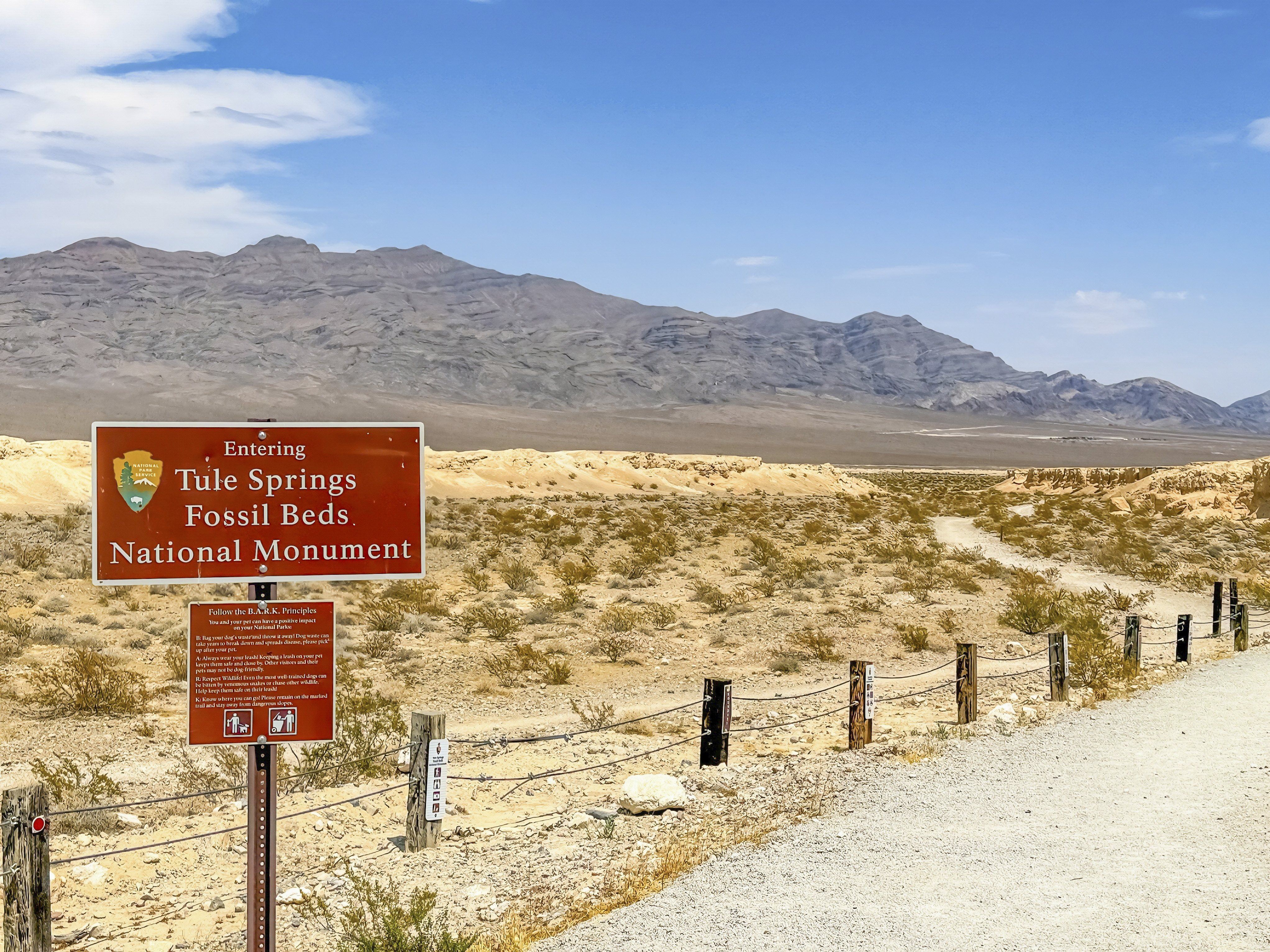

Tule Springs Fossil Beds National Monument protects 22,650 acres along the northern edge of the Las Vegas Valley and preserves the largest open-air Pleistocene fossil site in the Mojave Desert. Visitors can explore pale-colored badlands, desert scrub, seasonal wildflowers, and mountain views along the easy 2.5-mile Aliante Loop or the 1.7- to 2.25-mile Durango Loop. Because the monument has no on-site visitor center, restrooms, drinking water, or shade, travelers should bring sufficient water, avoid extreme summer heat, and visit between sunrise and sunset; fossils are often difficult to recognize in the field, so the nearby Ice Age Fossils State Park Visitor Center offers a better opportunity to see specimens from Tule Springs (National Park Service [NPS], 2025a, 2026).
Geologically, the monument preserves the Las Vegas Formation, approximately 573,000- to 8,530-year-old sediments deposited by ancient springs, streams, marshes, and wet meadows as regional climate and groundwater conditions changed; fossil-bearing layers dating from roughly 100,000 to 12,500 years ago contain evidence of Columbian mammoths, ancient camels, horses, bison, giant ground sloths, dire wolves, saber-toothed cats, American lions, aquatic snails, and wetland plants (Springer et al., 2018). Today, these former wetlands support a resilient Mojave Desert ecosystem, including Las Vegas bearpoppies, coyotes, jackrabbits, birds of prey, reptiles, and the threatened Mojave desert tortoise, while also serving as an important wildlife corridor amid expanding urban development (NPS, 2024). Recent research reported by the NPS includes USGS scientists returning to a historic 1963 excavation trench in 2024 to collect geological and carbon-rich samples, continuing efforts to refine the chronology of the ancient wetlands and understand how they responded to rapid climate shifts (NPS, 2025b).


References:
National Park Service. (2024). Modern ecosystems. Tule Springs Fossil Beds National Monument.
National Park Service. (2025a). Basic information. Tule Springs Fossil Beds National Monument.
National Park Service. (2025b). Climate and earth science. Tule Springs Fossil Beds National Monument.
National Park Service. (2026). Trails. Tule Springs Fossil Beds National Monument.
Springer, K. B., Pigati, J. S., Manker, C. R., & Mahan, S. A. (2018). The Las Vegas Formation (Professional Paper 1839). U.S. Geological Survey.
AI Disclosure Statement:
Artificial intelligence tools were used in the creation of this page, including elements such as writing, image enhancement, voice enhancement, and/or editing support. All final creative decisions were made by the creator.


Leave a Reply