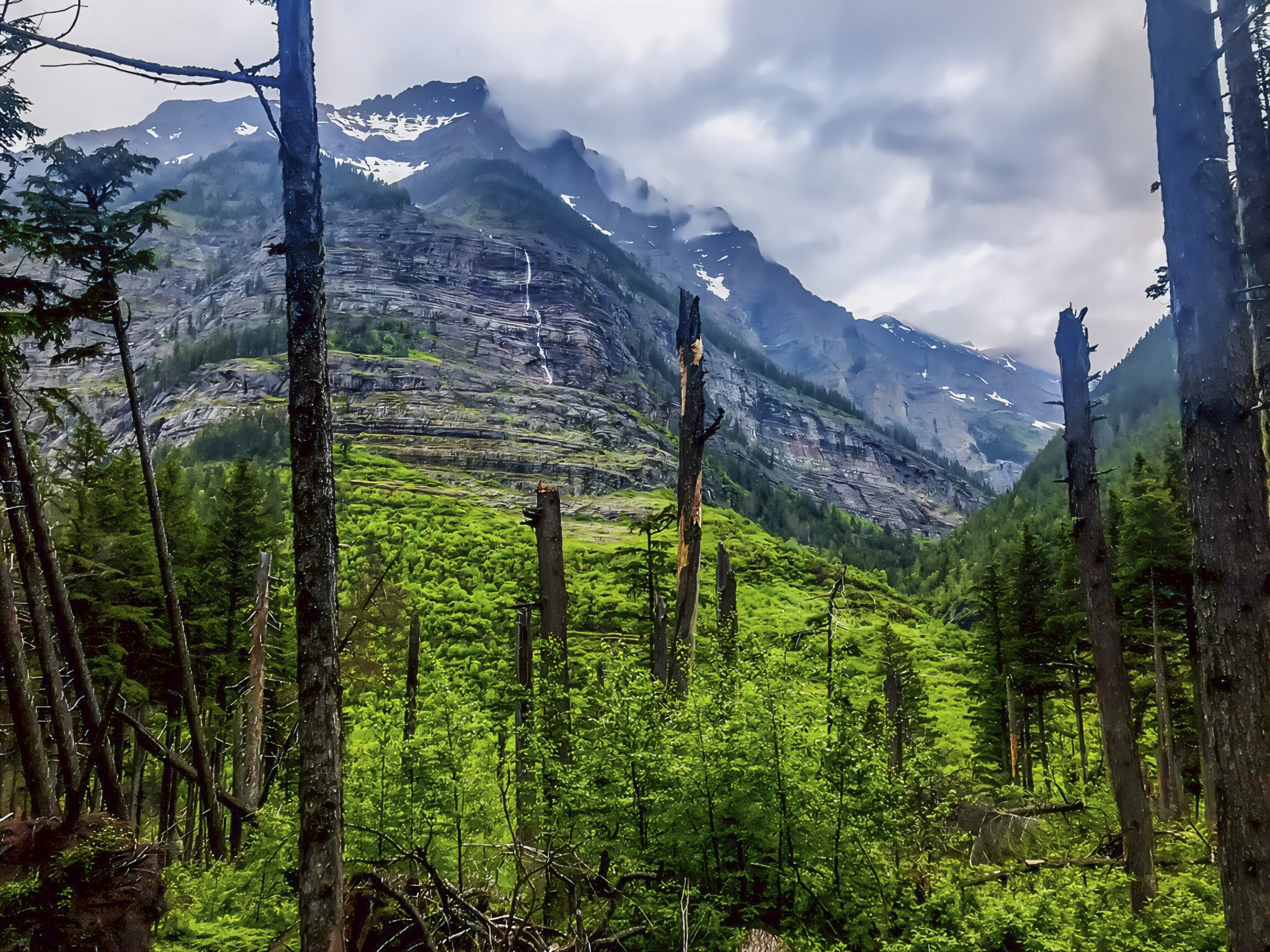

Located in Glacier National Park, Montana, the Avalanche Lake Trail offers hikers an opportunity to explore one of the park’s remarkable mountain ecosystems. The trail begins near the Avalanche Picnic Area along the famous Going-to-the-Sun Road, initially passing through the Trail of the Cedars, an accessible nature trail surrounded by towering western red cedars and western hemlocks. From there, hikers continue through a dense forest toward Avalanche Lake, a mountain lake surrounded by steep cliffs and waterfalls. According to the National Park Service (n.d.-a), the hike is approximately 2.3 miles (3.7 kilometers) one way from the trailhead near the parking area, or 4.6 miles (7.4 kilometers) round trip, with approximately 741 feet (226 meters) of cumulative elevation gain. The trail is generally considered moderately challenging, with rocky sections and gradual climbs. Visitors should bring drinking water, suitable hiking shoes, and bear spray, while checking trail conditions before starting their adventure.
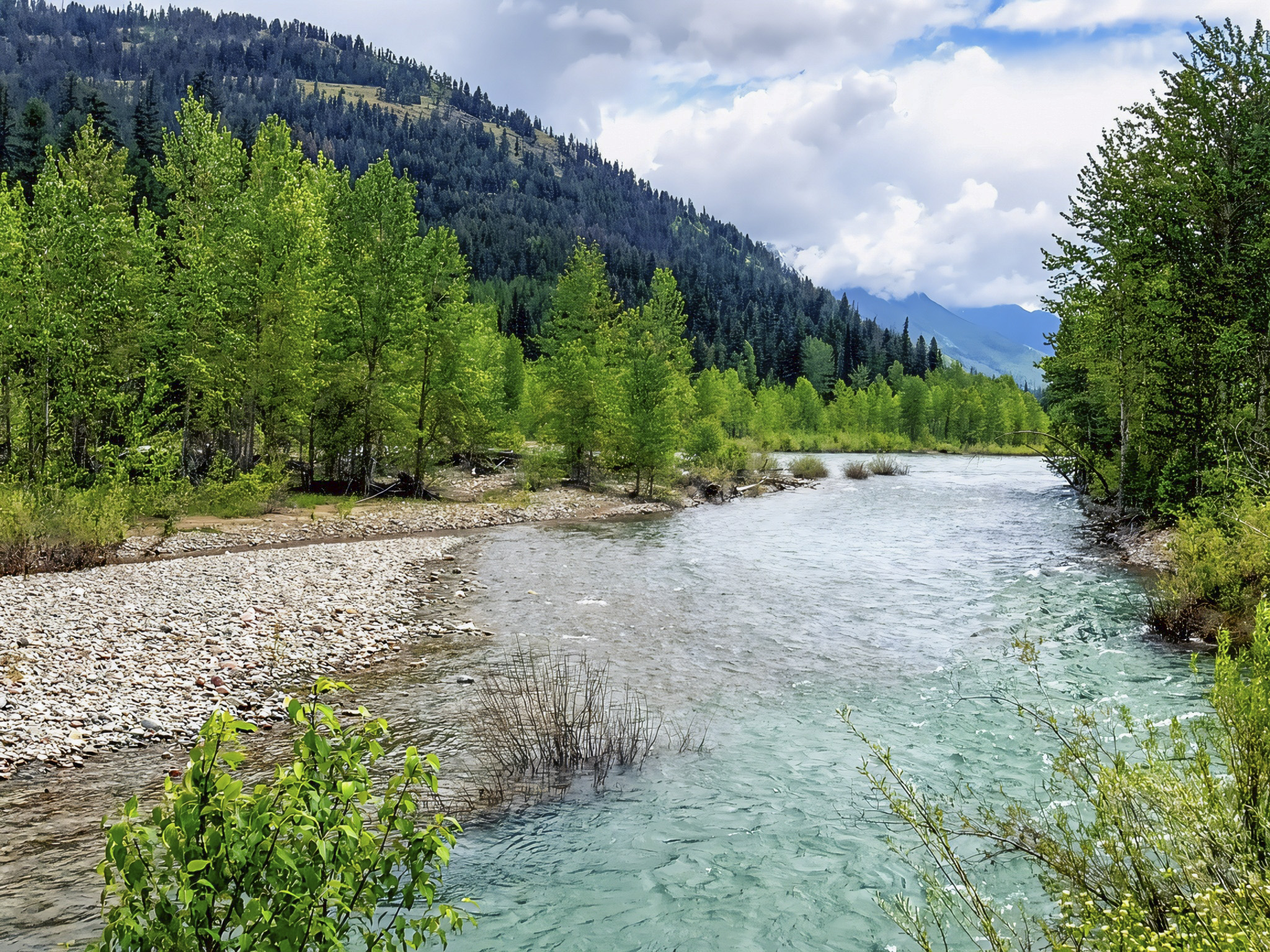
One of the trail’s fascinating natural attractions is Avalanche Creek, where snowmelt-fed water flows through narrow rocky passages and forested valleys. Along the Trail of the Cedars, hikers can encounter Avalanche Gorge, where flowing water has gradually carved and polished the surrounding bedrock. This process, known as fluvial erosion, occurs when moving water and transported sediments wear away rock surfaces over long periods. According to the National Park Service (n.d.-b), seasonal snowmelt, rainfall, and stream runoff continuously reshape Glacier National Park’s waterways by transporting and depositing sediments. The surrounding mountains also reveal an extraordinary geological history. Many of the park’s sedimentary rocks originated as deposits in an ancient inland sea approximately 1.5 billion years ago. These layers were eventually uplifted through tectonic forces and shaped by glaciers and erosion, producing the rugged mountain landscape visitors experience today (National Park Service, n.d.-c).

The Avalanche Lake Trail also passes through a biologically rich forest ecosystem that supports a remarkable variety of plant and animal life. The cool, moist environment surrounding Avalanche Creek provides favorable growing conditions for western red cedars, western hemlocks, mosses, ferns, and other shade-tolerant plants. These forests differ from the drier conifer communities found elsewhere in Glacier National Park because of variations in moisture, temperature, and elevation. Fallen trees and decaying wood are essential components of this ecosystem, providing habitats for fungi, insects, and microorganisms while gradually returning nutrients to the soil. Forest disturbances, including windstorms, avalanches, disease, and wildfires, also influence the growth and distribution of vegetation. Through a natural process called ecological succession, younger plants eventually establish themselves in areas where older vegetation has died or been disturbed (National Park Service, n.d.-d). For science enthusiasts, the trail offers an opportunity to understand how forest ecosystems continually change and regenerate.
As hikers approach Avalanche Lake, the surrounding landscape opens into a dramatic mountain basin shaped by ancient glacial activity. The lake lies beneath towering cliffs, where waterfalls descend from higher elevations, carrying water from melting snow and ice. Glaciers helped carve many of the park’s steep valleys and mountain basins as their enormous weight and slow movement eroded the underlying bedrock (National Park Service, n.d.-e). Today, Avalanche Lake provides a scenic destination for hikers interested in mountain landscapes, geology, and wildlife observation. The hike is particularly rewarding during the warmer months when the trail is generally more accessible, although conditions vary with snowpack and weather. Because the Avalanche Creek area is among the park’s most popular destinations, parking can be limited, and visitors may consider using the park’s seasonal shuttle service when available (National Park Service, n.d.-f). Beyond its recreational appeal, the Avalanche Lake Trail demonstrates how ancient geological forces, flowing water, and living forest ecosystems interact to shape one of Montana’s extraordinary natural landscapes.


References
National Park Service. (n.d.-a). Avalanche Lake Trail. U.S. Department of the Interior. https://www.nps.gov/places/avalanche-lake-trail.htm
National Park Service. (n.d.-b). Geologic activity. Glacier National Park. U.S. Department of the Interior. https://www.nps.gov/glac/learn/nature/geologicactivity.htm
National Park Service. (n.d.-c). Geologic formations. Glacier National Park. U.S. Department of the Interior. https://www.nps.gov/glac/learn/nature/geologicformations.htm
National Park Service. (n.d.-d). Forests. Glacier National Park. U.S. Department of the Interior. https://www.nps.gov/glac/learn/nature/forests.htm
National Park Service. (n.d.-e). Glacial geology. Glacier National Park. U.S. Department of the Interior. https://www.nps.gov/glac/learn/nature/glacial-geology.htm
National Park Service. (n.d.-f). Avalanche Creek. U.S. Department of the Interior. https://www.nps.gov/places/avalanche-creek.htm
AI Disclosure Statement:
Artificial intelligence tools were used in the creation of this page, including elements such as writing, image enhancement/generation, voice enhancement, and/or editing support. All final creative decisions were made by the creator.


Leave a Reply