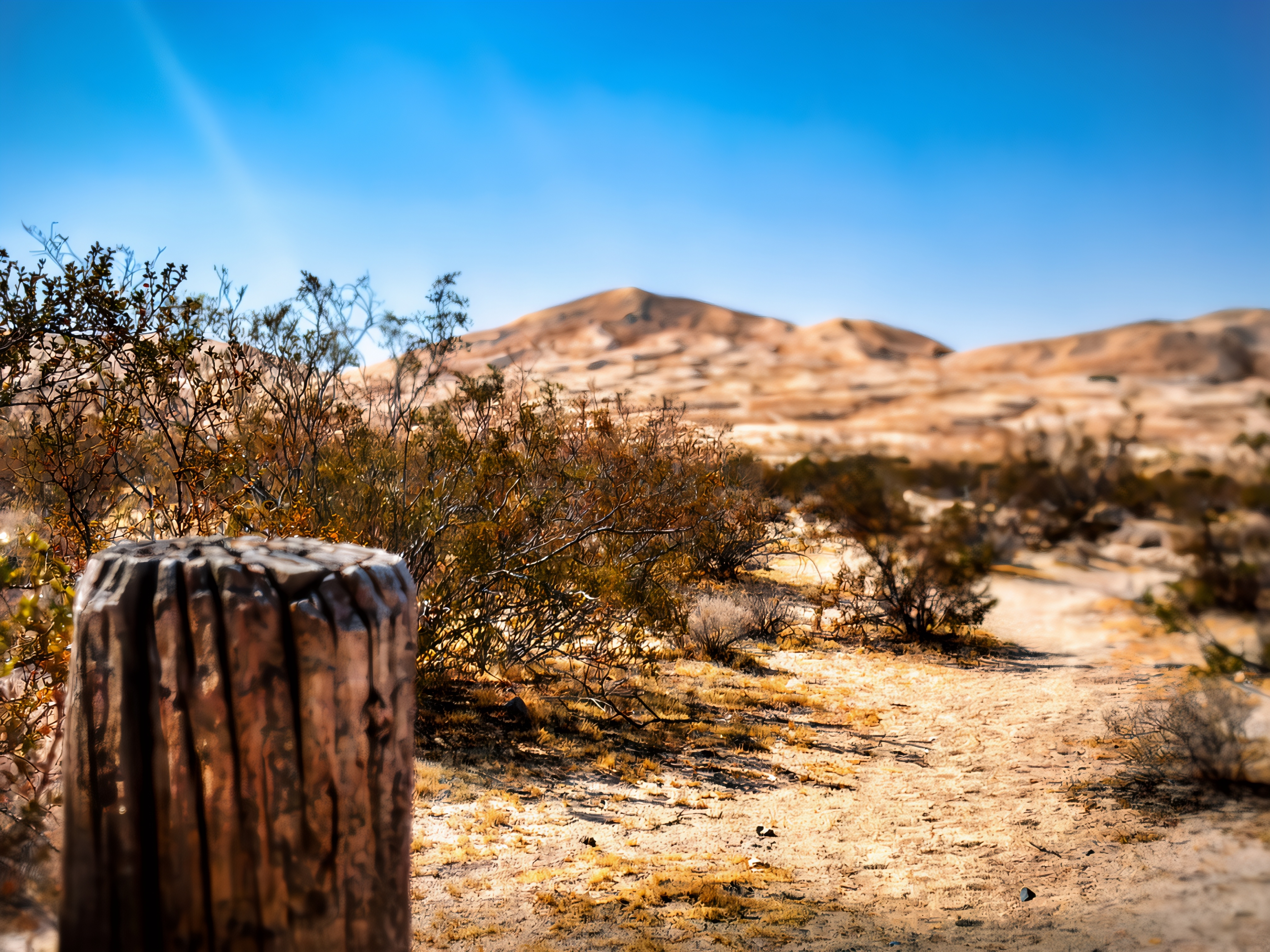

Kelso Dunes form a spectacular wind-sculpted landscape within Mojave National Preserve in southeastern California. The tallest dunes rise roughly 600 feet (183 meters), and the strenuous hike to their crest covers about three miles round trip, with no shade or water available along the route. Under dry conditions, sliding sand may produce a deep vibration known as “booming,” making Kelso one of only a few known booming dune fields in North America (National Park Service [NPS], 2026).
Geologically, the dunes preserve a long story of rivers, vanished lakes, wind, and changing climate. Quartz- and feldspar-rich sediment originally carried from the San Bernardino Mountains by the Mojave River accumulated in ancient Lake Mojave; after the region became drier, winds transported exposed sand toward the Granite and Providence mountains, whose influence on airflow helped trap it at Kelso. Although much of the dune field accumulated approximately 2,400–9,000 years ago, mineralogical and geochemical evidence indicates that nearby mountain alluvial fans also contributed sediment, giving the dunes a more complex origin than the older single-source explanation suggested (NPS, 2026; Muhs et al., 2017).
Despite their seemingly barren appearance, the dunes are a biological island filled with highly specialized life. The NPS reports seven endemic insect species—including the Kelso Dunes Jerusalem cricket, giant sand-treader cricket, and shield-backed katydid—found nowhere else on Earth. Travelers may also encounter kangaroo rats, kit foxes, jackrabbits, coyotes, sidewinders, desert tortoises, and the Mojave fringe-toed lizard, whose comb-like toe scales help it move over loose sand; scattered dune plants stabilize parts of the surface and provide food, shelter, and cooler microhabitats for desert animals (NPS, n.d.-a; NPS, 2026).
Latest research emphasizes that Kelso Dunes should be understood as both a geological formation and a vulnerable living ecosystem. The newest major peer-reviewed study focused directly on the dunes found that their different sections received sand from multiple sources and through seasonally changing wind pathways, demonstrating how even a relatively compact dune field can preserve complex environmental history (Muhs et al., 2017). More recently, the NPS identified invasive grasses, altered wildfire cycles, increasingly variable precipitation, road impacts, and climate change as urgent research priorities across Mojave National Preserve—pressures that could affect vegetation-stabilized sand, wildlife movement, and the isolated endemic species associated with the Kelso ecosystem (NPS, 2024).


References:
Muhs, D. R., Lancaster, N., & Skipp, G. L. (2017). Geochemical evidence for a complex origin for the Kelso Dunes, Mojave National Preserve, California, USA. Geomorphology, 276, 222–243. U.S. Geological Survey
National Park Service. (n.d.-a). Insects, spiders, centipedes, millipedes. Mojave National Preserve. https://www.nps.gov/moja/learn/nature/insects.htm
National Park Service. (2024). Research needs. Mojave National Preserve. https://www.nps.gov/moja/learn/nature/researchneeds.htm
National Park Service. (2026). Kelso Dunes. Mojave National Preserve. https://www.nps.gov/moja/kelso-dunes.htm
AI Disclosure Statement:
Artificial intelligence tools were used in the creation of this page, including elements such as writing, image enhancement, voice enhancement, and/or editing support. All final creative decisions were made by the creator.

Leave a Reply