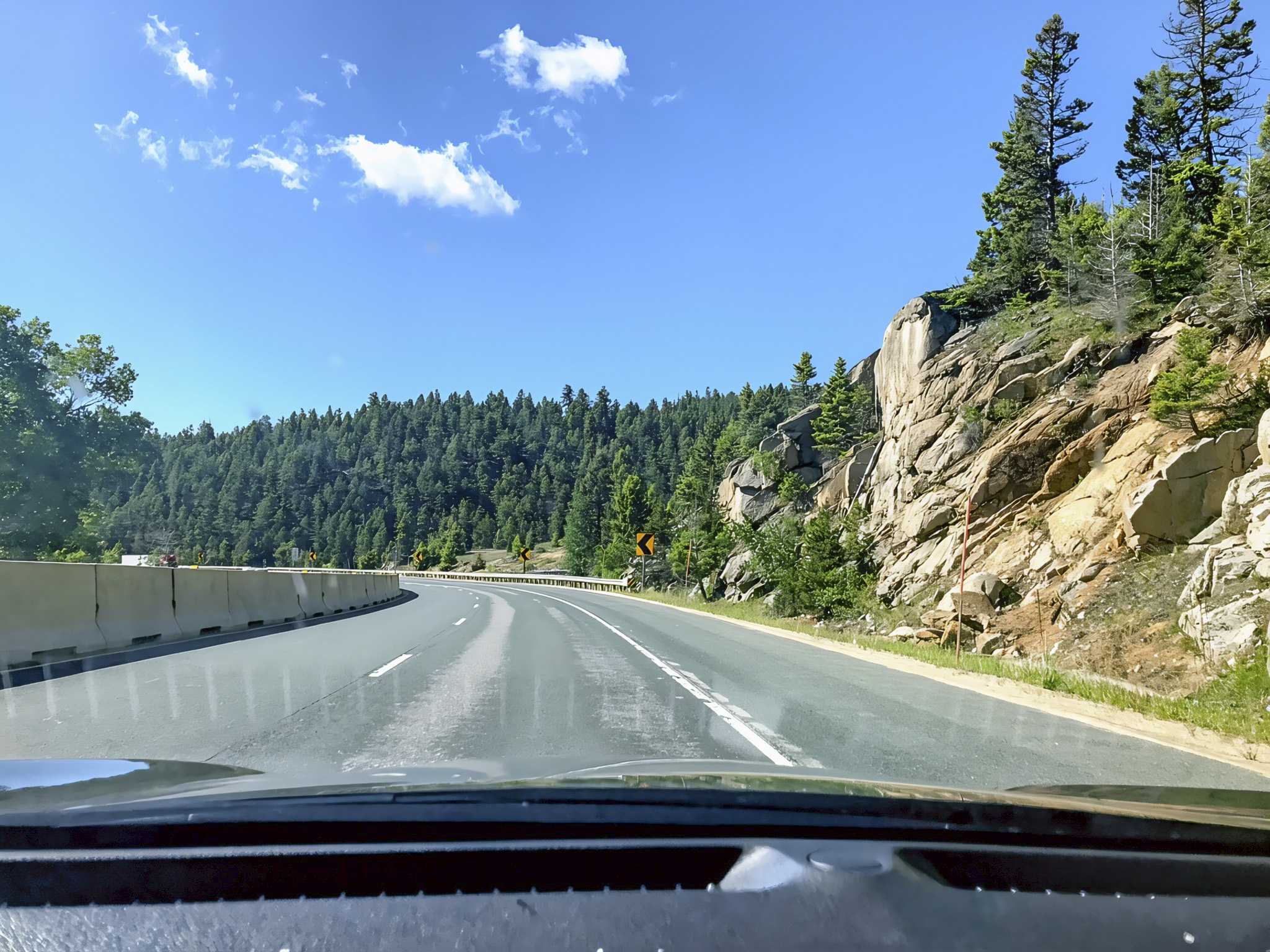

Traveling along Interstate 90 (I-90) between Missoula and Livingston offers an opportunity to experience the natural beauty of western and southwestern Montana. This approximately 230-mile (370-kilometer) stretch of highway passes through the Northern Rocky Mountains, connecting forested valleys, open grasslands, agricultural communities, and mountain landscapes. Along the way, travelers pass through or near historic communities such as Deer Lodge, Butte, and Bozeman before reaching Livingston, a gateway to the Yellowstone River Valley. The surrounding region includes broad valleys, mountain ranges, and rivers that support Montana’s diverse ecosystems. According to Montana Fish, Wildlife & Parks (n.d.-a, n.d.-b), western and southwestern Montana contain extensive public lands, mountain forests, grasslands, and important river habitats. For travelers and science-lovers, the drive provides an opportunity to discover how geology, climate, and biological diversity shape the landscapes of the American West.
Driving this section of I-90 is generally straightforward, although travelers should expect changing elevations, winding mountain sections, long stretches of open countryside, and occasional steep grades. The interstate crosses the Continental Divide near Butte and passes through Bozeman Pass before descending toward Livingston. Travelers can find fuel, food, accommodations, and opportunities for sightseeing in communities along the route. They can also explore nearby parks, historic mining districts, rivers, and hiking areas. However, weather conditions can change rapidly, particularly at higher elevations, where snow, ice, fog, and strong winds may affect driving. The Montana Department of Transportation (n.d.-a) provides road conditions, construction notices, weather information, and traffic alerts through its 511 travel service. Strong crosswinds are a particular concern near Livingston, where temporary traffic restrictions or detours may be necessary during hazardous conditions (Montana Department of Transportation, n.d.-b). Historically, this transportation corridor was important long before the modern interstate existed. Indigenous peoples traveled through mountain passes such as Bozeman Pass for thousands of years, and the Lewis and Clark Expedition crossed the pass with guidance from Sacagawea. Later, railroads and automobile highways followed similar routes, helping connect Montana’s growing communities (National Park Service, n.d.).

The geological history of this region is one of the most fascinating aspects of the journey. Western Montana forms part of the Northern Rocky Mountains, where mountain building, volcanic activity, faulting, and erosion have shaped the landscape over millions of years. The mountains contain ancient sedimentary rocks, metamorphic formations, and igneous rocks produced by molten material cooling beneath Earth’s surface. Near Butte, the Boulder Batholith is an important geological formation that developed during the Late Cretaceous, when large quantities of magma intruded into the Earth’s crust. This granite-rich formation is closely associated with the mineral deposits that made Butte one of America’s most historically significant mining centers (Montana Department of Transportation, n.d.-c). Elsewhere, tectonic movements created mountain ranges and basins, while rivers gradually eroded valleys and transported sediments into lower areas. During the Pleistocene ice ages, glaciers also reshaped many of Montana’s mountain landscapes, carving valleys and depositing sediment. These geological processes help explain why the region contains a mixture of rugged peaks, rounded mountains, broad valleys, and exposed rock formations (Smith et al., 2020).
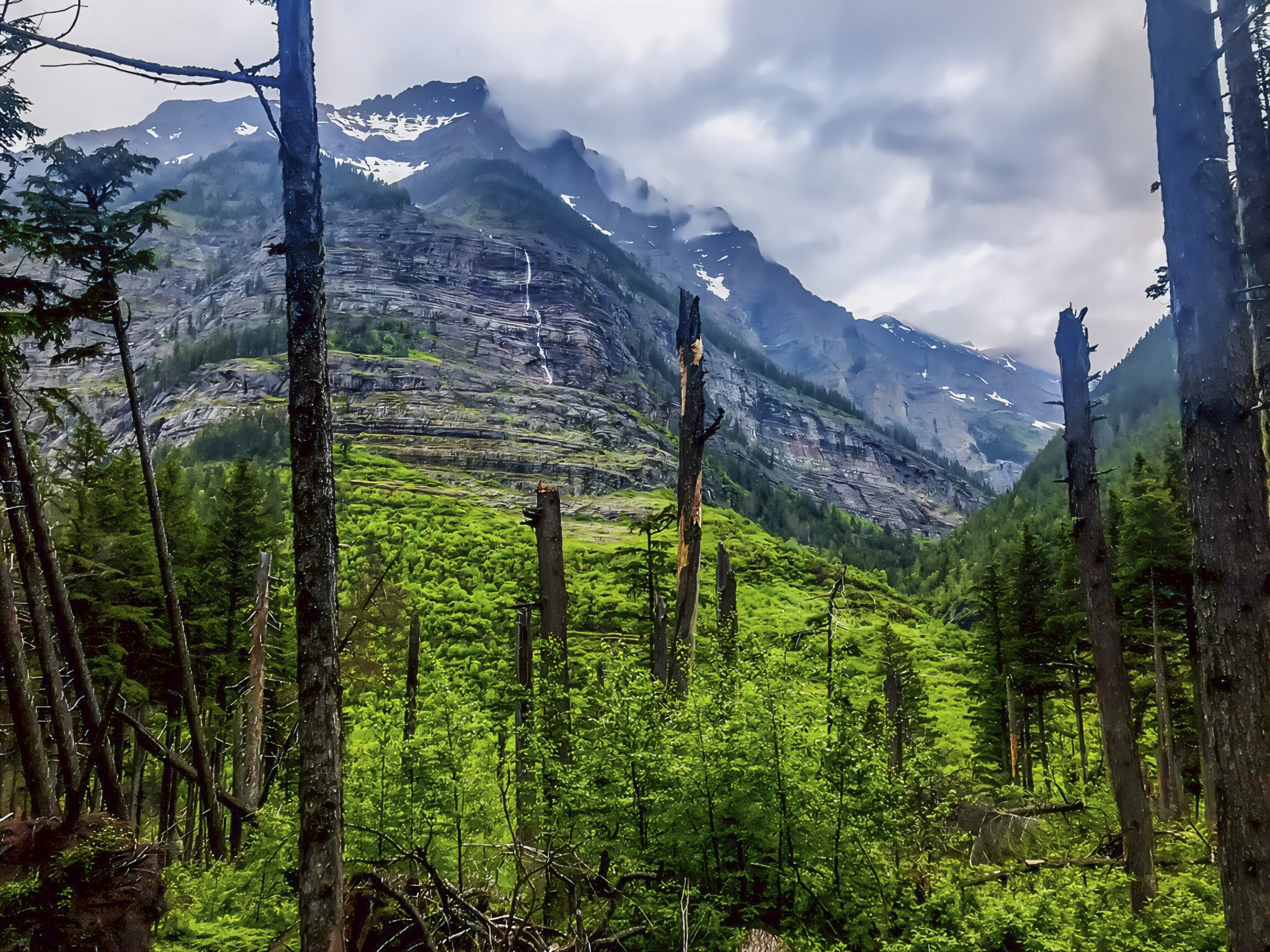
Beyond its geology, the I-90 corridor passes through biologically diverse environments that support numerous plant and animal species. Mountain slopes contain coniferous forests, while lower elevations feature grasslands, sagebrush communities, wetlands, and riverbank vegetation. These habitats provide food, shelter, and breeding areas for wildlife such as elk, mule deer, moose, black bears, mountain lions, and many bird species. Streams and rivers throughout the region also support fish populations, including native trout species. Montana Fish, Wildlife & Parks (n.d.-a, n.d.-b) identifies southwestern Montana as an important region for wildlife habitat, aquatic ecosystems, and outdoor recreation. The contrast between forested mountains and open valleys also reflects environmental differences in elevation, temperature, precipitation, and soil conditions. For example, cooler and wetter mountain environments generally support extensive forests, while relatively dry valleys often favor grasses and shrubs. These ecological transitions make the drive particularly interesting for visitors who enjoy observing nature. Whether exploring historic communities, stopping at designated viewpoints, or simply traveling across the state, Interstate 90 between Missoula and Livingston offers a memorable journey through Montana’s natural history, where geology and biology come together to create the landscapes of the Northern Rockies.


References
Montana Department of Transportation. (n.d.-a). Traveler information. https://www.mdt.mt.gov/travinfo/
Montana Department of Transportation. (n.d.-b). I-90 detour Livingston, MT. https://www.mdt.mt.gov/travinfo/livingston-detour.aspx
Montana Department of Transportation. (n.d.-c). Geologic road signs. https://mdt.mt.gov/travinfo/geomarkers.aspx
Montana Fish, Wildlife & Parks. (n.d.-a). Region 2 (West-central Montana). https://fwp.mt.gov/aboutfwp/regions/region2
Montana Fish, Wildlife & Parks. (n.d.-b). Region 3 (Southwest Montana). https://fwp.mt.gov/aboutfwp/regions/region3
National Park Service. (n.d.). Bozeman Pass. U.S. Department of the Interior. https://www.nps.gov/places/bozeman-pass.htm
Smith, L. N., et al. (2020). Quaternary geology of Montana. In Geology of Montana, Volume 1: Geologic History (Special Publication 122). Montana Bureau of Mines and Geology. https://mbmg.mtech.edu/pdf/geologyvolume/Smith_QuaternaryMontanaFinal.pdf
AI Disclosure Statement:
Artificial intelligence tools were used in the creation of this page, including elements such as writing, image enhancement/generation, voice enhancement, and/or editing support. All final creative decisions were made by the creator.


Leave a Reply